
In RFMC’s “All Dolled Up” series, I’m taking my first journey through the seven original films, one reboot film and one TV series of the “Child’s Play/Chucky” franchise. Spoilers follow.
Overall impressions
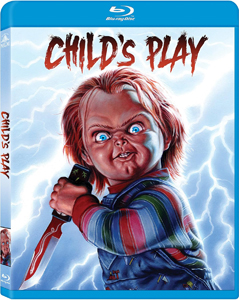
“Child’s Play” (1988) is exactly the evil-doll movie you think it is. You will have absorbed it via osmosis via pop culture. But at less than 90 minutes, it’s breezy, engrossing fun for people who are accustomed to horror movies. For young viewers, it might be a bit scary.
It deserves credit for codifying the evil-doll subgenre. It didn’t originate the idea, as the concept existed before pop entertainment. The 1936 film “The Devil-Doll” was cinema’s trope originator. Then there’s the Agatha Christie short story “The Dressmaker’s Doll” (1958), which deserves more credit. Then a 1963 “Twilight Zone” episode, “Living Doll,” was all about a deadly doll, and major horror films toyed with the idea in the margins, as with the ventriloquist dummy in “Deep Red” (1975) and the clown in “Poltergeist” (1982).
“Child’s Play” (1988)
Director: Tom Holland
Writers: Don Mancini (screenplay, story); John Lafia, Tom Holland (screenplay)
Stars: Catherine Hicks, Chris Sarandon, Alex Vincent
But when “Child’s Play” hit, it was something fresh, delightful and safely subversive for 1988 mainstream moviegoers. Its originality shines if you can put yourself in their mindset – a vibrant Eighties winter in Chicago and a homey apartment building sells the sense of time and place – and even if you can’t, the movie remains admirably blue-collar shlock horror.
Outsider status
The friendless kid. Alex Vincent gives a coached but serviceable performance as Andy, a kind-hearted lower-class grade-schooler who has no friends, which is why he wants a Good Guy doll (which we colloquially call Chucky dolls, although the one in the commercial calls himself Oscar).
The person who no one believes. Another classic outsider status is that of the person who knows what’s going on but no one believes him/her. The insane knowledge that Chucky is possessed by serial killer Charles Lee Ray (Brad Dourif) – not to be confused with Dourif’s “X-Files” character Luther Lee Boggs — gets handed off three times, from Andy to his mom (Catherine Hicks), from the mom to the detective (Chris Sarandon), and from the detective to his partner. Oddly, it’s never frustrating for a viewer (like in, for example, “Ghost Whisperer”); just kind of amusing.
Comedy quotient
90 percent horror, 10 percent comedy. I didn’t have a smile pasted on my face, even though the whole thing is low-grade amusing. Though “Child’s Play” is intrinsically a dark comedy, director/co-writer Tom Holland and his two co-writers (including Don Mancini, creator and shepherd of the saga) choose to play it like straight horror. Though it’s not scary, per se, it is moody thanks to lots of scenes of beaten-down Chicago, indoors and out.

Magic and the dolls
Charles Lee Ray (Chucky’s human form and full name), when dying from a shootout with the cops, has the wherewithal to use a magic chant to transfer his psyche into a Good Guy doll. He had learned it from a local magic man. Pretty unrealistic pre-planning, but I’ll allow it. Maybe we’ll learn in later films that he’s not a generic, salt-of-the-earth serial killer.
Later, in another hoary moment, the magic man – having been tortured by Chucky’s voodoo – reveals that Chucky can transfer his essence back into a human, but only one qualifies: the first person he revealed his true nature to, Andy.
This film also names one other of the Good Guy dolls, in a commercial: Oscar.
Special effects
The team uses a mix of the doll being “creepy” due to the foreboding score, first-person POV camera moves, prosthetic plastic hands, a costumed little person, animatronics, and people reacting to the doll’s attacks to get most of the way toward Chucky being believable. A little goodwill from a viewer takes it over the finish line.
Best kill
When Chucky sends babysitter Maggie (Dinah Manoff) – who we have grown to like, as she’s a good friend to Karen and “aunt” to Andy — out a sixth-story window to her death, we immediately go from a sweet family drama to a slasher movie. It’s a smart move to have Chucky start off big.
Best one-liner
“This is the end, friend.” Andy responds to Chucky’s “Friends till the end” – one of the doll’s programmed lines – by lighting him on fire.
Second place: An apartment-building resident sees Chucky in the elevator and notes that he’s one ugly doll. “F*** you,” Chucky says, out of her earshot.
References and meta commentary
The Good Guy dolls are a reaction to the Eighties fad of Cabbage Patch Kids and the trading-card parody Garbage Pail Kids. Chucky transitions between the two extremes in appearance, though we know he’s more like the latter at heart – call him Choppin’ Chucky, perhaps.
When Chucky gets burned and dismembered, he’s somehow still hanging on like Jason in “Friday the 13th Part VI: Jason Lives” (1986) and the almost unkillable robot from “The Terminator” (1984). And the camera angle of Karen holding a door shut while Chucky’s knife pokes through is clearly an homage to “The Shining” (1980).
Continuity and predictions
Chucky is dead at the end of this one; the heroes have shot him through the heart, as per the magic man’s instructions. Refreshingly, by today’s standards, there’s no sequel baiting. The obvious way for him to return is that he’s still barely alive and he will use the chant to transfer into a fresh doll. Hopefully it’ll be somewhat more creative.