

Allow me to set aside my knitting and solve a mystery from my sitting room: What is the correct ranking order of Agatha Christie’s 16 Miss Marple books (12 novels, one Marple-only short-story collection and three other collections that include some Marple)?
Though Jane Marple often figured out cases by matching suspects’ and witnesses’ behavior to a person she’d previously encountered, Jane herself had no predecessor – though she had elderly spinster sleuths who followed, like “Murder, She Wrote’s” Jessica Fletcher.
She was a pioneer of detectives who weren’t actually detectives; she’d rather hang a pot of flowers at her St. Mary Mead home than hang a shingle. Plus, she was perpetually about 100 years old. As we approach 100 years after her debut in the short story “The Tuesday Night Club” (1927), she stands as a beacon for women sleuths and elderly sleuths, and reminds us that no one has to stay invisible.
Here are my rankings of her 16 books (without spoilers of whodunit), along with directions to the English-language film and TV adaptations:
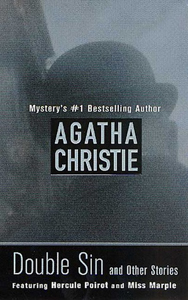
16. “Double Sin and Other Stories” (1961)
Amid this collection, Marple solves two puzzles from her armchair. In “Greenshaw’s Folly,” we learn more about her nephew Raymond West and his Christie-esque success as a novelist (although he does not write detective novels; he thinks those are silly). It’s an OK mystery driven by fakery, but I would’ve liked more character for the titular house. In “Sanctuary,” Christie plays history teacher: Churches were once sanctuaries under English law. This adds a nice, if outdated, wrinkle.
Adaptations: “Greenshaw’s Folly” is in Julia McKenzie’s “Marple” Season 6 (2013). “Sanctuary” has no adaptation.
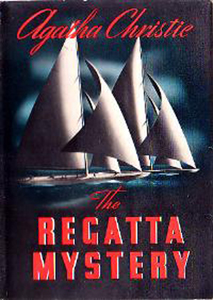
15. “The Regatta Mystery and Other Stories” (1939)
Marple only appears once, but it’s the collection’s best entry. In “Miss Marple Tells a Story,” adapted from a 1934 radio play, a man who is wrongly accused of murder asks for a second opinion in his defense. He tells Marple the details and she deduces what happened, cutting through the legal procedure simply with her brain. If only it was always that easy.
Adaptation: None
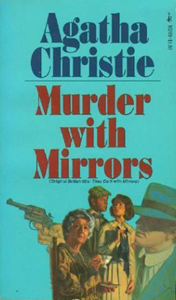
14. “They Do It with Mirrors” (1952)
Also published as “Murder with Mirrors”
Mirrors factor into several Christie works, but not actually this one. Rather, the title refers to magicians’ tricks … which do appear in this story but are beside the point. Really, the novel is an exercise in narrative misdirection. Though it’s thoroughly readable, I am ranking good novels against other good novels, and this one is relatively weaker. The solution is not guessable and not quite plausible, and the villain’s grander scheme isn’t explained well. And when one considers the possibilities of the setting of a reform school for boys, it’s strange that the plot could take place anywhere.
Adaptations: Margaret Rutherford’s “Murder Ahoy!” (1964), Helen Hayes’ “Murder with Mirrors” (1985), Joan Hickson’s “Miss Marple” episode (1991), McKenzie’s “Marple” Season 4 episode (2010)
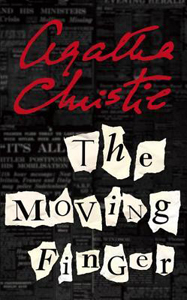
13. “The Moving Finger” (1943)
One of the more forgettable Marple cases is actually sleuthed by Jerry, who – like a more mobile James Stewart from “Rear Window” — takes an interest in a gossipy village where he is rehabilitating a leg injury; Marple comes in late with a helpful nudge. Jerry’s love story with Megan is light and rather bizarre. She strikes him as being horse-faced but, one makeover later, he’s in love. That’s a bit on the shallow side, and so is the town’s rampant and rancid gossip, though it’s interesting to realize the poison-pen letters would garner a “Yeah, so what?” today. Christie is right that gossip can be poisonous, but she doesn’t add much to the notion.
Adaptations: Hickson’s “Miss Marple” episode (1985), Geraldine McEwan’s “Marple” Season 2 episode (2006)
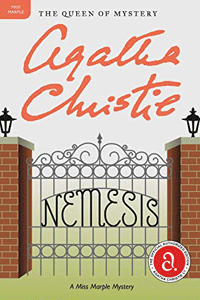
12. “Nemesis” (1971)
In the last Marple she wrote, we can feel the tape-recorder-dictating Christie striving for a sense of mystery, but she spins her wheels too long. Marple doesn’t know the details of the case (sketched out to her in a letter from late friend Jason Rafiel, from “Caribbean Mystery”) till 100 pages in, and there’s no reason for several characters to obfuscate or be oblivious. That said, Marple has her moments, including clever trickery at the post office. And “Nemesis” (Jane’s code name, from Rafiel) plays like the definitive psychological portrait of Marple, with her unwavering sense of justice. It’s nice to get that in the chronologically last novel.
Adaptations: Hickson’s “Miss Marple” episode (1987), McEwan’s “Marple” Season 3 episode (2009)
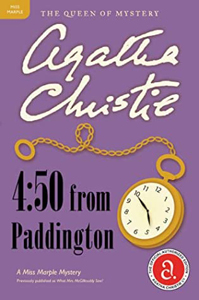
11. “4:50 from Paddington” (1957)
Also published as “What Mrs. McGillicuddy Saw!”
The destination is eventually reached, but it’s a convoluted, chug-along journey. The first question is “Who was killed and thrown off a train?” The second, once Marple figures out the estate where the body must have landed, centers on a murder at that estate. Marple works by proxy, tapping Lucy Eyelesbarrow, who gives nice insight into the era’s job market: She’s so great at logistical planning that she’s become financially sound from one-off jobs in that discipline. As such, she takes Marple’s detective assignment – in the guise of a job taking care of old Crackenthorpe – for fun. The curmudgeon and the milquetoast sons pining for her are almost parodies, but Lucy is a delight.
Adaptations: Rutherford’s “Murder, She Said” (1961), Hickson’s “Miss Marple” episode (1987), McEwan’s “Marple” Season 1 episode (2004)
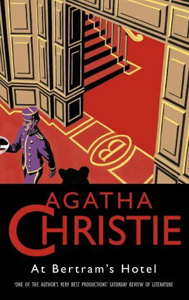
10. “At Bertram’s Hotel” (1965)
It seems the police inspector could solve this one without Marple’s help – she even makes a mistake at one point! – but as far as Christie’s spy-murder mashups go, “Bertram’s” leans positive. It’s not solvable, but the conclusion is gripping. The novel’s strongest trait, though, is its time-capsulization of a period where the lodgings weren’t a necessary evil on a trip but rather the destination in and of itself; Jane is fond of the titular London hotel from childhood trips. Also, Christie – via Marple – observes a new, frightening breed of young woman in Elvira, who knows how to use her wiles to get away with things.
Adaptations: Hickson’s “Miss Marple” episode (1987), McEwan’s “Marple” Season 3 episode (2007)
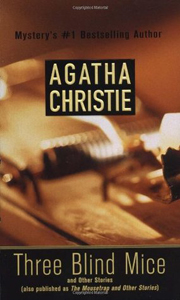
9. “Three Blind Mice and Other Stories” (1950)
Also published as “The Mousetrap and Other Stories”
Four 1940s Marples are at the heart of this collection. In the cute “Case of the Caretaker,” Marple’s doctor writes out a puzzler for her to solve in order to feel better. “Strange Jest” is engrossing, as Marple follows clues to a treasure within a house. “Tape-Measure Murder” and “The Case of the Perfect Maid” are more serious, featuring the trope of prosthetic facial disguises, which fool everyone … except Jane. I wonder if she or Perry Mason have saved more people from wrongful convictions.
Adaptations: None
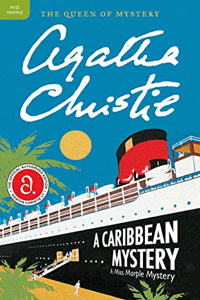
8. “A Caribbean Mystery” (1964)
Though Christie traveled the world, and Poirot favors Middle East trips and Marple makes her way around England, “Caribbean Mystery” is the author’s only novel set in the Americas – on the fictional island of St. Honore. Despite being based on Christie’s own trip, the resort doesn’t have a specific sense of island life nor local culture, as it’s about the white guests. On the plus side, the team-up of Marple and Rafiel is delightful, both knowing the other is not a suspect since she’s “about a hundred” and he’s “a broken-up old crock.” The mystery springs from a deceptively simple moment wherein the eventual victim says in a public space that he has “a picture of a murderer.”
Adaptations: Hayes’ 1983 movie, Hickson’s “Miss Marple” episode (1989), McKenzie’s “Marple” Season 6 episode (2013)
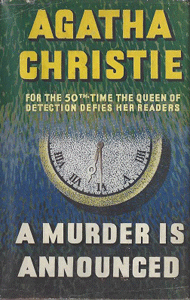
7. “A Murder Is Announced” (1950)
Hyped as Christie’s 50th book (although the math is shaky), the plot likewise starts with hype as the classified ads list an upcoming murder. In a funny poke at how people just go along with things, the household prepares a party even though no one there placed the ad! The sense of small-town whimsy in Chipping Cleghorn (featuring humorously named characters like Bunch and Murgatroyd) launches a novel that soon gets heavily procedural – Marple meets reliable ally Inspector Craddock here – and ultimately turns rather tragic.
Adaptations: Hickson’s “Miss Marple” episode (1985), McEwan’s “Marple” Season 1 episode (2005)
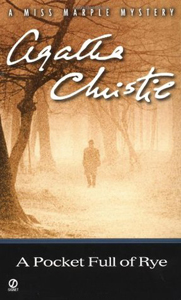
6. “A Pocket Full of Rye” (1953)
OK, so it’s perhaps not the best Fifties novel with “Rye” in the title, but it makes a case as the best of Christie’s “nursery rhyme” novels. The setup is standard yet evocative, as the Fortescue manor is so large that residents of the household can go a long time without crossing paths. In the waning days of manors that can afford a staff, the denizens are well-characterized and well-named, including the butler Crump. That fits his personality — though it’s unlikely the butler did it. Christie dodges cliches but knows how to use tropes to her advantage in a mystery that’s smart yet solvable. Marple’s big heart is on display as she seeks justice for her former maid.
Adaptations: Hickson’s “Miss Marple” episode (1985), McKenzie’s “Marple” Season 4 episode (2009)
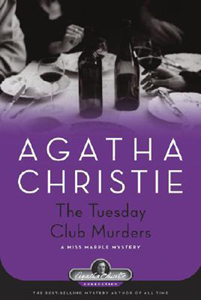
5. “The Thirteen Problems” (1932)
Also published as “The Tuesday Club Murders”
This is Marple’s introduction to readers, as 12 of these 13 stories appeared in magazines prior to her novel debut in 1930. Though “cozy” is an overused term, it is indeed cozy that people gather for a dinner party in the pre-TV era to throw mystery puzzles at each other – from things they experienced or heard about. Though Christie seemingly violates the “show, don’t tell” philosophy, these tales retain immediacy and suspense. With a twinkle in her eye, the yarn-twirling spinster solves them all, amazing everyone without putting her knitting down. She’s a humble literary star right off the bat.
Adaptations: “The Blue Geranium” is in McKenzie’s “Marple” Season 5 (2010). “The Herb of Death” is incorporated into “The Secret of Chimneys” (McKenzie’s “Marple” Season 5, 2010) and “The Thumb Mark of St. Peter” is incorporated into “Greenshaw’s Folly” (McKenzie’s “Marple” Season 6, 2013). The other 10 stories have not been adapted.
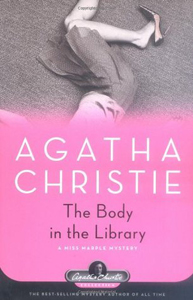
4. “The Body in the Library” (1942)
Marple’s philosophy of never trusting anyone is put to good use in this mystery in her home village of St. Mary Mead. (Surprisingly, only this and the top two on this list are firmly set there.) Christie starts in a humorous mood, with a title that purposely sounds like a parody. That body ends up having quite a tragic backstory, but the book’s tone – featuring Marple’s banter with bestie Dolly Bantry, whose house is the site of the library – is upbeat. Readers will have a better chance of solving it if they put themselves back in a time when IDs weren’t so easy and when orphans, for better or worse, struggled to find their place within British societal structure.
Adaptations: Hickson’s “Miss Marple” episode (1984), McEwan’s “Marple” Season 1 episode (2004)
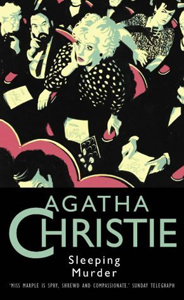
3. “Sleeping Murder” (1976)
Christie’s last-published novel (although she wrote it mid-career and put it in a vault) is a throwback to her heyday — appropriate since it features a murder in retrospect and reflections about the past. It serves as a final exam for a reader; we have a fair chance to solve it if we apply Marple’s lessons such as following evidence rather than what people say. For Christie completists, there’s either continuity or self-copying, as a key element is also found in “By the Pricking of My Thumbs” (“Was it your poor child? Behind the fireplace?”). Another coincidence is Gwenda accidentally purchasing her childhood home, but it makes the mystery so personal that I happily forgive it.
Adaptations: Hickson’s “Miss Marple” episode (1987), McEwan’s “Marple” Season 2 episode (2006)
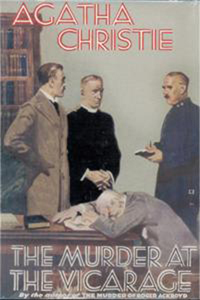
2. “The Murder at the Vicarage” (1930)
For readers who missed the short stories, their introduction to Marple comes in sneaky backdoor fashion. Just as citizens, police and murderers overlook the old dear, so does the novel itself in a purposeful way. The vicar is the narrator; the egoless Marple sweeps in toward the end to solve the murder that took place in his study. Village life in St. Mary Mead blooms off the page like Jane’s beloved garden, including the darker side. Marple’s ability to read people by thinking back on similar people she has encountered is in place, as are her – and Christie’s – thoughts about justice, including musings about society’s duty toward the criminally insane. The novel also includes little delights like a laugh-out-loud passage about whether a murderer’s sneeze would sound different.
Adaptations: Hickson’s “Miss Marple” episode (1986), McEwan’s “Marple” Season 1 episode (2004)
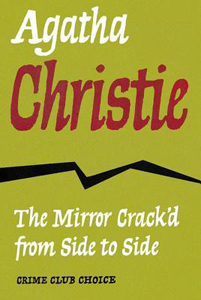
1. “The Mirror Crack’d from Side to Side” (1962)
Also published as “The Mirror Crack’d”
In another novel that has nothing to do with mirrors (the title comes from Tennyson), Christie — via Marple — somberly reflects on the rise of Developments on the edge of St. Mary Mead. Luckily, some things never change, like Christie’s crafting of a grand mystery. This one starts showily with famous actress Marina Gregg buying and refurbishing Dolly’s home and hosting a party to meet her neighbors. A fan dies from a poisoned drink intended for Gregg, who stares into space in a fugue state. We, and Marple and Craddock, repeatedly turn over this moment but Christie still has a surprise up her sleeve, plus a tragic ending and a denouement of Poirot-vian extrajudicial moralizing. Aside from the missing “e,” this novel has it all.
Adaptations: Angela Lansbury’s 1980 movie, Hickson’s “Miss Marple” episode (1992), McKenzie’s “Marple” Season 5 episode (2011)