Mel Brooks, who turns 100 on June 28, 2026, has directed 11 films – one for each decade of his life … although he made all of them between the ages of 41 and 69. Before that, he broke through as a TV comedian, and afterward he continues to write and act, particularly in the voice booth. How many centenarians have an acting credit? Well, Brooks will reprise his roles as Yogurt and Skroob in next year’s “Spaceballs: The New One.”
This list looks only at his directorial work, though it should be noted that Brooks co-wrote all 11 of these films. Though the Zucker-Abrahams-Zucker films that overlapped with his career are equally celebrated, it must be said that Brooks struck first with the direct parody style in 1974 (six years before “Airplane!”), skewering a genre (Westerns) in “Blazing Saddles” and a specific film (“Frankenstein”) in “Young Frankenstein.”
Here are my rankings of Brooks’ 11 directorial efforts. Click on each title for a full review.
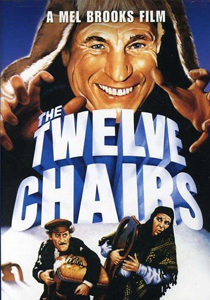
11. “The Twelve Chairs” (1970)
This adaptation of a 1928 novel about the early days of the Soviet Union is faithful, and I see what Brooks is trying for with slapstick comedy amid the crushing hopelessness, but the relief doesn’t come through. Frank Langella and Ron Moody play a duo hoping to regain a diamond-filled chair that had been taken by the state. Brooks throws himself, sometimes literally, into a small role as a servant, but we feel the drag of knowing – due to narrative convention – we must get through 11 empty chairs before the end.
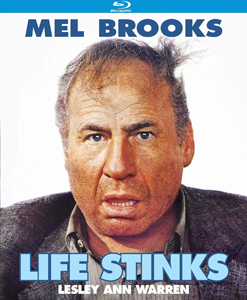
10. “Life Stinks” (1991)
For forgiving viewers, this would make a nice double feature with “Twelve Chairs” as we move into the hopelessness of the homeless condition in 1991 Los Angeles. Brooks’ rich developer Goddard Bolt bets his evil lawyer colleague (Jeffrey Tambor) that he can survive a month on the streets with no money to start, and he quickly learns it’s extremely difficult. The point is well-taken, and the film includes one particularly well-acted moment of Bolt’s friend lying dead as the bustle continues around him. But the laughs are in shorter supply than Bolt’s funds.
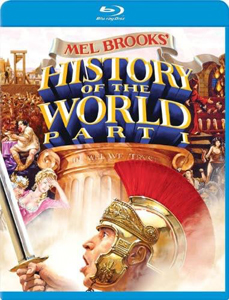
9. “History of the World: Part I” (1981)
Now we take a step up in the sense that you can pull out several great clips that will make “History” seem like it’s a great film: the early days of man (and of critics), the Ten Commandments, Comicus (Brooks) applying for unemployment in the Roman Empire, and of course the legendary musical number “The Spanish Inquisition.” As a narrative, it feels longer than the French Revolution itself, lacking the comedic momentum that characterizes his better works.
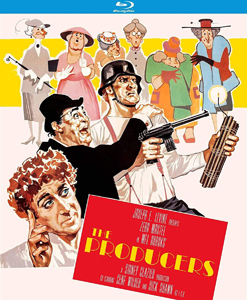
8. “The Producers” (1967)
The premise is better than the execution in the movie that put Brooks on the map. Titular Max (Zero Mostel) and Leo (Gene Wilder) realize they can make more money from a Broadway flop than from a hit – and the script nicely explains the accounting logistics – so they aim to do that with “Springtime for Hitler.” It’s highlighted by a showstopping musical number, and the film would be remade in 2005 into a full musical that’s a tad less clunky than the original.
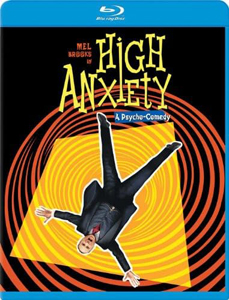
7. “High Anxiety” (1977)
Brooks’ fandom of Alfred Hitchcock comes through as he plays a nervous Everyman caught in scenarios from “Vertigo,” “Spellbound,” “North by Northwest” and “The Birds.” Look for co-writer and future director Barry Levinson attacking Brooks’ Dr. Richard H. Thorndyke in a riff on “Psycho’s” Shower Scene. Throw in absurdities such as a busload of brass musicians playing suspenseful music diegetically, and people who share the main character’s anxiety will find both a sympathetic portrayal and relief via chuckles. But the fact that Hitch himself brought a sense of humor to his work restrains the parodic opportunities.
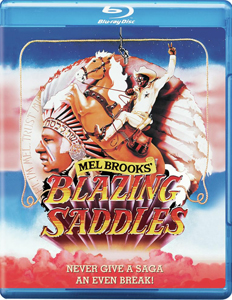
6. “Blazing Saddles” (1974)
Brooks lampoons Westerns in his first film to try the formula of taking tropes and exaggerating them for comic effect. Featuring a friendship between a black sheriff (!) (Cleavon Little) and a white drunkard (Gene Wilder), “Saddles” comments on the corruption of the Wild West but has enough absurdity to avoid heaviness. Humor ranges from the crassness of the beans scene to the clever workaround of bluntly using an edit to demonstrate Wilder’s quick-draw skill. The fourth-wall-break denouement illustrating the falseness of cinema is famous, but I’m a little disappointed that the narrative doesn’t get an ending.
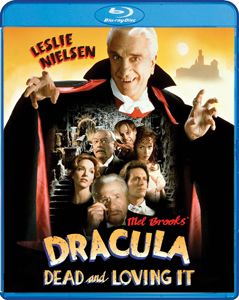
5. “Dracula: Dead and Loving It” (1995)
Brooks, who takes the Van Helsing role, pokes fun at the Dracula films from around this time and digs up a treasure trove of gags made all the more absurd against the costume-drama backdrop. Peter MacNicol gets the showiest role as Renfield, especially in a sequence where he can’t help but eat flies and bugs but tries to hide it. Steven Weber plays the proper British man who tries to resist a vampirized/sexualized girlfriend (“But Lucy, I’m British!” “So are these!”). Leslie Nielsen may be an obvious choice for the lead, but sometimes obvious is the way to go. A mild disappointment is that the soundstages don’t match the grandeur of Brooks’ more lauded Universal Monsters riff.
4. “Robin Hood: Men in Tights” (1993)
I’m more familiar with this parody than with source material “Robin Hood: Prince of Thieves,” and I’m not a rare case. In the same plot but with more laughs, Cary Elwes (who seemed like an A-list action star between this and “The Princess Bride”) plays the titular hero aiming to win the love of Maid Marian (Amy Yasbeck). Brooks’ internal tropes – like a camera crashing through a window to get a peek at the bathing Marian – now play like greatest hits. But everyone is so into the spirit that we’re won over again, from the lazy king (Richard Lewis) to the constantly frustrated Sheriff of Rottingham (scene-stealing Roger Rees).
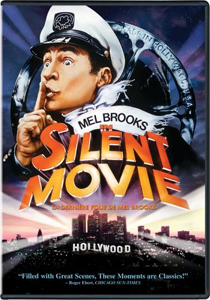
3. “Silent Movie” (1976)
Brooks, Marty Feldman and Dom DeLuise nail the slapstick style that hadn’t been in vogue in a half-century, embellishing it for a new audience with color and more music and sound effects than was common in the 1920s. It’s a cleverly meta story-within-a-story about moviemaker Mel Funn aiming to resurrect his career with a silent film. Just as stars like Burt Reynolds and James Caan signed on to work with the red-hot Brooks IRL, they do the same in the fictional casting process, lampooning their images. “Silent” briskly connects on a high percentage of borderline-PC jokes, including a blind man having his seeing-eye dog switched with an untrained dog.
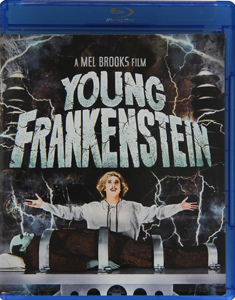
2. “Young Frankenstein” (1974)
An engrossing story in addition to being funny, this was my childhood source for the “Frankenstein” tale just as “Men in Tights” was for Robin Hood. It features career-best turns from Wilder, Feldman, Teri Garr, Peter Boyle and – even against that competition – Cloris Leachman finds a whole ’nother level as Frau Blucher, the castle’s heartsick maid whom the horses find terrifying. “YF” masters the form of copying the original narrative but exaggerating everything for humor. In a hilarious riff on the scene of the monster coming upon a blind man’s house, a slumming Gene Hackman delivers perhaps his funniest turn. The luscious production design, meanwhile, puts us right back into the 1930s Universal Monsters era.
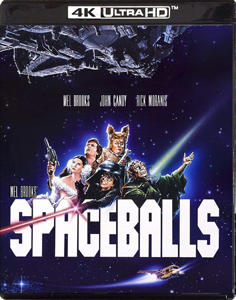
1. “Spaceballs” (1987)
Contrasting with other entries on this list, I did like the source material (mainly “Star Wars,” but there are some fun “Alien” and “Planet of the Apes” nods too) more than the parody. But I liked “Spaceballs” a lot, too, and watched it for the adventure as much as the jokes. This isn’t as direct of a narrative copy as other Brooks parodies; indeed, the plot of air being sucked from the planet Druidia – from whence comes Princess Vespa (Daphne Zuniga) – feels a lot like “The Phantom Menace,” which came out 12 years later. A laser-sharp commentary on merchandizing – in which Lone Star (Bill Pullman) and Barf (John Candy) aim to make “a s***load of money” – “Spaceballs” is not only Brooks’ funniest movie but also his smartest.