Cue Bernard Herrmann’s music and check into the Bates Motel for RFMC’s look at the 11 entries in the “Psycho” saga – five films, two TV projects and four books. And enough timelines to challenge “Halloween.” We have the original four-film saga, a remake that moves the action to 1998, and two separate continuities on the small screen.
Meanwhile, Robert Bloch did his own thing with the written word, which is his wont because his 1959 novel inspired Alfred Hitchcock to make one of his best movies one year later – despite it also being one of his simplest and cheapest. Simultaneous to the films exploring Anthony Perkins’ Norman Bates, Bloch’s crackling novels explored wider psychosis in 20th century America.
Whether the motel is in Kansas, California or Oregon, if you like good storytelling, it’s well worth pulling your car out of the rainstorm. Here are my rankings of the 11 “Psycho”/“Bates Motel” entries:
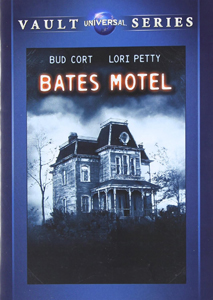
11. “Bates Motel” (TV pilot, 1987)
Directed and written by Richard Rothstein
Bad in a fascinating way, this 90-minute NBC pilot that was repackaged as a TV movie does feature a nice turn by “A League of Their Own’s” Lori Petty as a Manic Pixie Dream squatter who hits it off with new motel/house owner Alex (Bud Cort). We get the slightest shades of what “Twin Peaks” would do a few years later as offbeat horror mixes with primetime soap; sock-hopping ghosts revel amid the motel’s partiers as a decidedly non-suspenseful score plays. The show aimed for a standalone story each week, with the inexplicably supernatural motel taking center stage in the wake of Norman’s death. NBC made the right call, as I wouldn’t be excited about watching a second episode, but the first and worst “Bates Motel” has curiosity value.
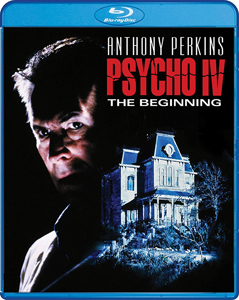
10. “Psycho IV: The Beginning” (TV movie, 1990)
Directed by Mick Garris, written by Joseph Stefano
It must’ve been neat to get such an iconic character’s backstory via one’s Showtime subscription — and with writer Stefano back from the OG, no less. But “Psycho IV” suffers today from being compared to the 2010s “Bates Motel” series, which also explores Norman’s childhood (albeit on a different timeline). Even without that comparison, it’s not very good. Individual scenes have some weight, particularly when Perkins and CCH Pounder (as a radio host) are simply talking. Flashbacks to Henry Thomas and Olivia Hussey as Norman and Norma are hurt by predictable child abuse. While it’s nice to see the rundown motel in the final act, by this point Stefano has not earned a redemption arc for Perkins’ Bates like he thinks he has.

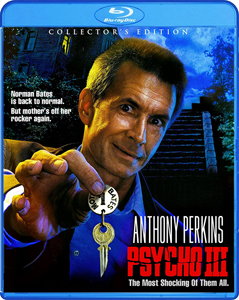
9. “Psycho III” (movie, 1986)
Directed by Anthony Perkins, written by Charles Edward Pogue
This is the even-Steven film; some of it’s good, some of it not so much. The plot isn’t great and the motel’s status as a party spot is disconcerting enough that we’re more or less rooting for Norman to kill again. The psychological unease is stripped, but there’s still fun to be had. Daring aspects include a romance for Norman with an ex-nun, something he’s not up for; and a scenery-chewing guest turn by Jeff Fahey as a traveling guitarist. Pogue and Perkins tap into their inner Hitchcock when a cop grabs an ice cube out of the ice chest but fortunately does not look down to notice the corpse.
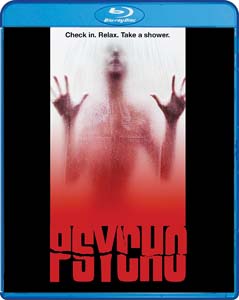
8. “Psycho” (remake movie, 1998)
Directed by Gus Van Sant, written by Stefano
This almost shot-for-shot remake is loathed partly because it exists, partly because it’s obviously inferior to the original. It’s actually not horrible, particularly at the start. Anne Heche – helped by the addition of color — is a vibrant Marion. Van Sant takes advantage of 1998’s less uptight sensibilities by having Marion’s line “You haven’t got your shoes on” play to a naked Sam (Viggo Mortensen) rather than one who is clothed except for his shoes. Then the story gets to the Marion-Norman handoff and fizzles. Vince Vaughn is a good actor … usually. But not when taking on Perkins one-on-one. The tighter denouement chronicling Norman’s condition is one more element in favor of the remake. Sure, its main value is as an experiment, but I think the utter hatred of the film – when classic works of theater are re-staged all the time — is a bit much.
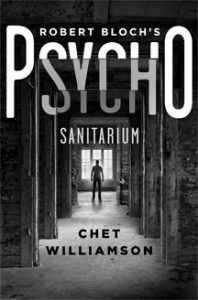
7. “Psycho Sanitarium” (novel, 2016)
By Chet Williamson
This is a wonderful surprise addition to Bloch’s trilogy of novels, taking place after book one and chronicling Norman’s time in the sanitarium. (Bloch’s sequels don’t feature much of Bates.) Williamson mimics his literary hero’s penchant for murder mysteries with unreliable narrators, although his prose doesn’t match Bloch’s folksy charm. He’s a great scene-setter, presenting us with a spooky old mental hospital with a records room down a side hallway in a sub-basement, and we’re aware that the place is filled with people at least as crazy as Norman. Williamson includes tie-ins to Bloch’s first two books while allowing his entry to stand alone.
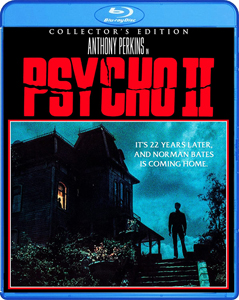
6. “Psycho II” (movie, 1983)
Directed by Richard Franklin, written by Tom Holland
The film franchise respectfully waited till after Hitchcock’s death to make a sequel, but the 23-year-wait turns out to be a good creative choice. As viewers, we figure Perkins’ Norman has served his time, has settled his mind and is committed to being peaceful. But, like Meg Tilly’s 20-something who needs a cheap place to stay and moves into the Bates house, we keep our guard up. The awkwardness of Norman’s and Mary’s living conditions combines with intense chemistry between the actors. While drawing parallels to the OG film, Holland paints additional coats of mystery; for example, this time we don’t know who’s looking through the peephole. Though it cashes in on the slasher-sequel era, Franklin’s film is a suspenser in the Hitchcock mold, which has earned it a cult following.
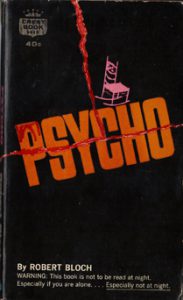
5. “Psycho” (novel, 1959)
By Robert Bloch
Hitchcock mined dime-store novels and did his own thing with them. Bloch’s book is no exception, but it’s notable for being a zinging 125-page potboiler in its own right. He writes it as a mystery with a twist ending that I bet most 1959 readers did not guess; it takes advantage of the written medium in a way a film can’t. (Luckily, it wasn’t such a huge bestseller that the movie’s surprise was spoiled for the masses.) It’s more straightforward in structure, with Norman (and “Norma”) and Sam and Lila as the main characters, with the latter two being amateur sleuths looking for Lila’s missing sister Mary in Fairvale (seemingly in Kansas). Norman is different physically – fat, a drinker, and approaching middle age – and curious about his own psychological troubles. The idea of a murderer who kills out of insanity fascinated and creeped out readers at the time, which is why Sam breathlessly analyzes the villain to wrap things up.
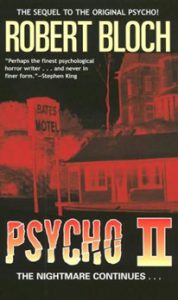
4. “Psycho II” (novel, 1982)
By Bloch
Whereas the film of the same name explores one psycho a second time, the literary sequel explores a second psycho. It has nothing to do with the Bates Motel or house, and Norman is not the main character. Rather, Bloch explores the high crime rate of the Eighties and the dirty secrets of how to climb the rungs in Hollywood (the action centers on the production of “Crazy Lady”). Numerous characters are potential psychopaths, including a doctor who is to the imprisoned Bates what “Halloween’s” Loomis is to Michael Myers. Indeed, slasher films are on Bloch’s mind, but not in a winking way as would be seen with the “Screams.” He’s into the idea that fictional violence leads to real violence, and although I don’t believe that’s true, Bloch is smart enough in his approach that I can’t begrudge him the theme.
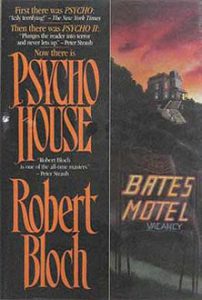
3. “Psycho House” (novel, 1990)
By Bloch
Bloch delivers his sharpest prose while switching from the cheeky misdirection of the first two books to a straight-ahead whodunit to cap his trilogy. He smartly uses meta-commentary, starting with a murder at the Bates Motel, which is now a tourist attraction. Visiting journalist Amy, working on a Bates book, and the Fairvale sheriff are the POV characters; both are cynically sharp-tongued in the hardboiled mold, and their banter sings. If one man is a psycho in book one, then a movie set is full of psychos in book two, here Bloch mulls the idea that everyone goes a little bit crazy … more than some of the time. It could almost be called “Psycho World” as Bloch balances his acerbic commentary on small-town human nature with a compelling mystery.
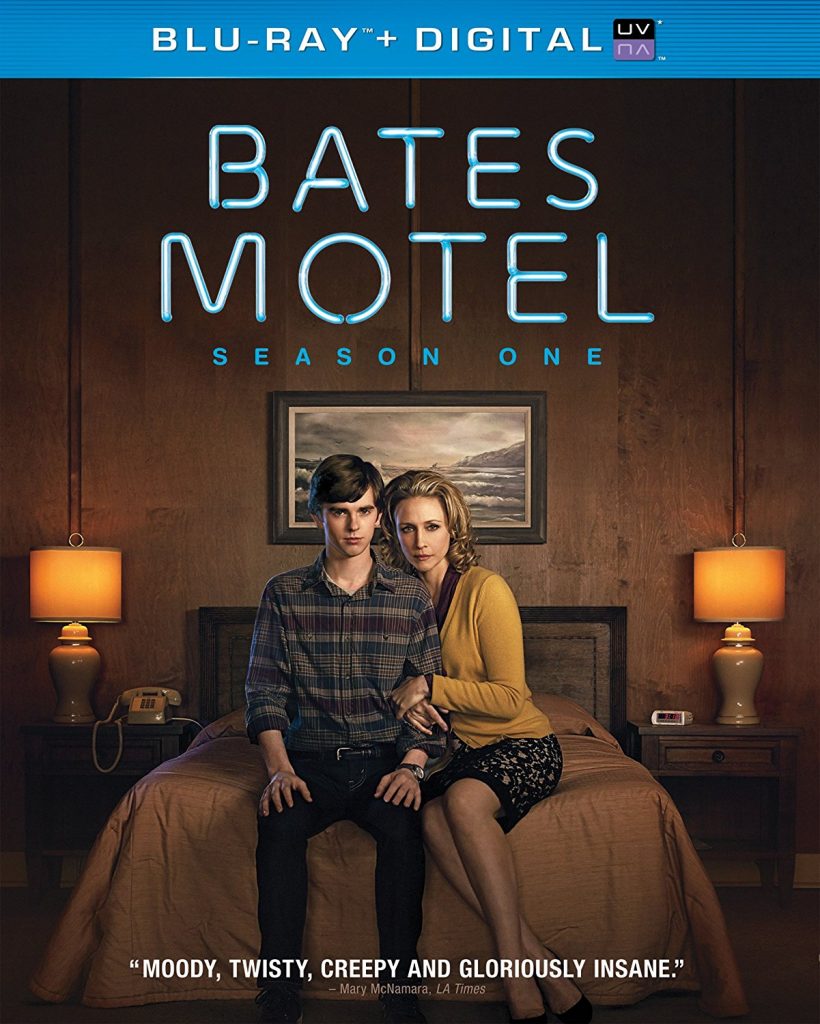
2. “Bates Motel” (TV series, 2013-17)
Five seasons (50 episodes), A&E; created by Anthony Cipriano, Carlton Cuse and Kerry Ehrin
In a decade where slow-burn, psychology-minded updates of classic characters dominated the small screen (see also “Gotham,” “Hannibal” and “Damien”), “Bates Motel” perfects the form. It made my top 10 every year of its run. Freddie Highmore has the unenviable task of following Perkins, and he matches him, while Vera Farmiga turns a corpse into a fleshed-out character. Fascinatingly, Norman does not start off bursting with red flags. Rather, both nature and nurture hammer him in his hormonal years; Norma means well but is overly bothered by the attractive young women swarming her son. Featuring great guest turns by the likes of Kenny Johnson and Max Thieriot – putting an incest-rapist and product of incest right in our faces – plus the constant threat of legal trouble from pot-growing in prohibition Oregon, “Bates Motel” is consistently intense. It plays with our expectations right up through the final season that does a rug-pull on our “Psycho” presumptions.
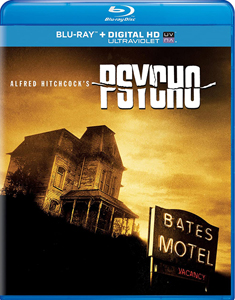
1. “Psycho” (movie, 1960)
Directed by Alfred Hitchcock, written by Stefano
The film I rank No. 2 on my Hitchcock list (behind “Vertigo”) demonstrates how a masterpiece can be made simply. It’s produced by the “Alfred Hitchcock Presents” TV crew and built around three shocking moments — including one that has its own documentary. Everything in between is suspense that comes from Herrmann’s earworm of a score and the fact that audiences will root for a main character because they are the main character. First it’s Janet Leigh’s panicked thief Marion, then it’s Perkins’ hotel clerk Norman, who seems to be covering for his bloodthirsty mother. The movie’s mid-film shift from one lead to another was unheard of and not often attempted since. Oh, this blockbuster-before-the-term-blockbuster is also – along with the same year’s “Peeping Tom” – a progenitor of the slasher genre. “Psycho” itself doesn’t wield its knife often, but it nonetheless cuts (and chills) to the bone.