
Religion is a source of comfort for theists … and a source of great premises for horror movies for atheist filmgoers like me. I love the built-in, centuries-old lore that comes with this genre. Though religious horror of course predates “The Omen,” Richard Donner’s film remains the purest example of the form, even 50 years after its release. It uses religion as the source of both evil and of good and has inspired too many films and TV shows to count.
This post looks only at “The Omen’s” direct descendants in film and TV. (There are also five books — novelizations of the first three films, plus a part four and part five — but I haven’t read the fifth one so I’ll set those aside.) Even more so than with “Halloween,” you’ll have no luck figuring out the continuity, as Damien’s age never matches up with the year of the events. And even the prequel film’s events don’t line up with the original film!
Still, the follow-up projects arguably take away the most important thing from the original: being moody and scary as hell. Here are my rankings of the eight screen entries in the “Omen” saga, from Satanic to Godly:
8. “The Omen” (TV pilot, 1995)
NBC; directed by Jack Sholder, written by John Leekley
Such a misfire that producer Donner expressed open regret for making it, this pilot – salvaged as a TV movie – has little to do with the lore; the title seems to have been chosen for name recognition. Like the black oil that intrigued “X-Files” fans, except demonic instead of alien, a special-effects cloud possesses a string of people. Its ultimate goal, and the structure of who is good and who is bad in this world, is underexplored and uninteresting. A good cast of “I know that guy” actors like “Roswell’s” William Sadler and “X-Files’ ” Steven Williams have no chance against a bad script.
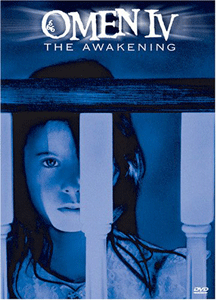
7. “Omen IV: The Awakening” (TV movie, 1991)
Fox; directed by Jorge Montesi and Dominique Othenin-Girard, written by Brian Taggert (screenplay, story) and Harvey Bernhard (story)
This requel retells the original story in a duller and gender-swapped way. The creepy kid is now a girl (Asia Vieira) and the POV character is the mom (a bedraggled Faye Grant). None of the characters are particularly interested to be in this plot; a reporter and religious man investigate, but they develop no plans such as the acquisition of daggers – formerly crucial to the lore, now somehow not worth mentioning. “X-Files” fans might enjoy seeing Megan Leitch (Mulder’s supposed adult sister) as a scheming nun, and the final act does break off in a new direction, but it’s too little too late.

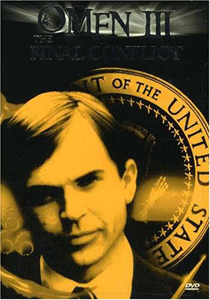
6. “The Final Conflict” (movie, 1981)
Directed by Graham Baker, written by Andrew Birkin
Sam Neill starred in a lot of horror movies and this is … one of them. To be fair, he is by far the best part of the trilogy capper as the adult Damien, blending charisma with (as viewers are aware) mind-control killings. The film knows modern corruption does not require secrecy; Damien is both the head of a major American corporation and the ambassador to the UK, enriching himself as he builds to a presidential run. There’s no internal conflict: “Most people confuse evil with their own trivial lusts and perversions,” he explains to the woman he has charmed. “True evil is as pure as innocence.” You’ve heard of movies where the villains aren’t as interesting as the heroes, but the opposite is the problem here: No one stands out as a legitimate threat to stopping the spawn of Satan’s rise.
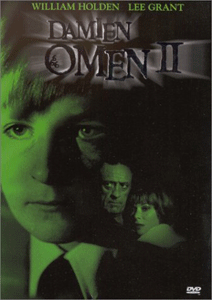
5. “Damien: Omen II” (movie, 1978)
Directed by Don Taylor; written by Stanley Mann and Mike Hodges (screenplay) and Bernhard (story)
A “Final Destination” movie before those officially existed, the sequel finds Damien (Jonathan Scott-Taylor) at a teen military school in Chicago where people around him are dying mysterious deaths. At first he seems oblivious; later he embraces that he’s doing it. The transition isn’t explained well. At the same time, the film is preoccupied with illustrating Damien’s path to power amid his family’s Thorn Industries, which is getting into the lucrative business of “famine” – buying poor farmers’ land then selling food back to them. The sequel lacks the mood of the original but is often enjoyable as schlock-and-shock horror.
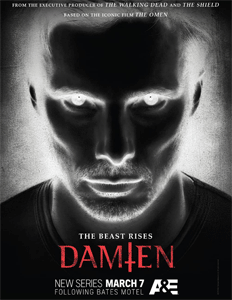
4. “Damien” (TV show, 2016)
A&E, 10 episodes; created by Glen Mazzara
This reboot-sequel imagines that Damien (Bradley James) grows to adulthood without knowing he is the son of the Devil; in fact, he’s a photojournalist seeking to do good. So we start with a mystery vibe as violence happens around him but he doesn’t know he’s responsible for it. The show looks and sounds great (composer Bear McCreary’s score is aggressive but respectful of Jerry Goldsmith). It’s shy about digging into specific evils of the 21st century, although a standalone episode (“Seven Curses”) addressing PTSD and VA incompetence is the standout. Veteran stars Scott Wilson and Barbara Hershey are given the worst material, as they hang around Damien like broken records, trying to convince him of his destiny. The canceled series peters out as it rushes to some kind of conclusion, but it’s a smidgen better than the film sequels.
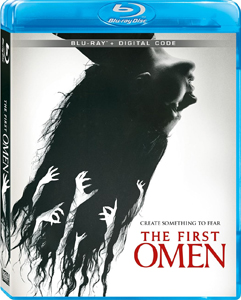
3. “The First Omen” (movie, 2024)
Directed by Arkasha Stevenson; written by Tim Smith, Stevenson and Keith Thomas (screenplay) and Ben Jacoby (story)
This is a rare case where the lead character is a sympathetic target: nun-to-be Margaret (“Servant’s” Nell Tiger Free). And also a rare case where the film (initially) seems to care about continuity: It’s set in 1971 and chronicles the Devil-worshiping branch’s attempts to get a novitiate impregnated by Satan. Stevenson creates a delicious Seventies vibe with the film stock’s look and popular camera moves from the era such as zooms. Despite a high bar, this is the goriest entry of the saga, particularly getting blunt with the birthing process. The final act either introduces a massive continuity error or a path for an additional prequel before we get to the 1976 events. Unfortunately, this creates more confusion than intrigue for now, but I can’t quibble with the overall artistry.
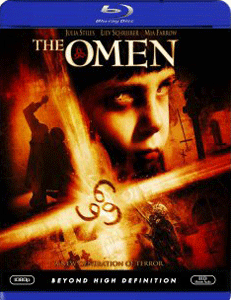
2. “The Omen” (movie remake, 2006)
Directed by John Moore, written by David Seltzer
This is one of those “unnecessary” remakes, but it must be said that it’s among the best, as Moore drenches the film in the grand and dark style of the Aughts to contrast with the near daylight horror of the O.G. The Thorns’ house has a ridiculous three stories now, and a coffee-shop chat takes place as snowflakes fall in the middle of nowhere. It’s stylish in an otherworldly way and has intriguing character embellishments, such as Father Brennan (a masterful Pete Postlethwaite) being more tragic due to his morphine addiction. Other good actors include Liev Schreiber, Julia Stiles and David Thewlis. I got drawn into the story all over again.
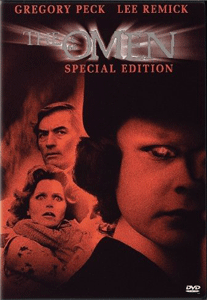
1. “The Omen” (movie, 1976)
Directed by Richard Donner, written by Seltzer
Donner was one of the great franchise-launchers, and I rank this effort ahead of even “Superman” (1978) and “Lethal Weapon” (1987). It’s grounded in overcast London, with the horrific deaths sneaking up and shattering the coziness; it also boasts a dead-of-night grave robbery. Although he’s a politician, Gregory Peck’s Robert Thorn is a family man whose one innocent secret (replacing his stillborn child with one from the church to spare his wife from depression) increasingly haunts him. With surprising aggression for the time (as scary as 1973’s “The Exorcist” is, its priests are the heroes), Seltzer is suspicious of the Church and holds the gruesome aspects of religion up to the light (the line “Drink his blood” is used instead of “Please participate in Communion”). The film fascinated both theists and atheists with the idea that a child might be pure evil – and if so, what do you do? Both the “Omen” saga and religious horror as a whole have gotten a half-century of mileage out of this theme.