
John Carpenter is a director who consistently does his own thing, pursues his own interests and answers to his own internal critic. Yet he also managed to be quite influential on cinema, as became clear as I watched and reviewed his 24 directorial efforts in film and TV.
“Halloween” is his obvious work of mass influence. But watching the “apocalypse trilogy” (“The Thing,” “Prince of Darkness” and “In the Mouth of Madness”), it’s hard to not see “The X-Files” in there, particularly with the wall-of-sound score. Another point in his favor: He’s among the great directors who is also a prominent composer (and vice versa).
He’s also not embarrassed to put out crap now and then, as the lower portion of this list suggests. He doesn’t hit the high points as often as some other big-name directors, yet his films are talked about more. Out of the legends who have quietly retired, his name comes up most among those we’d like to see make one more film.
But he doesn’t have it in him, so it’s just as well: His passion made his great films great. Here are my rankings of his 24 directorial projects. All are theatrical films unless otherwise noted; all are written by Carpenter unless otherwise noted.
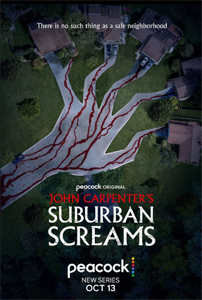
24. “Phone Stalker” (2023, TV episode)
Written by Amanda Deibert
This is an episode of “John Carpenter’s Suburban Screams,” a ridiculous Peacock series that isn’t even horror; it dramatizes real-life stalking cases. Even Carpenter’s own episode is bad, as he remotely directs Europe-based actors from the U.S. Trying to garner crass thrills from an ongoing (!) stalking case is distasteful, but the whole thing is so uninspired that I can’t work up much anger. I hope Carpenter used the payday to buy some good video games.
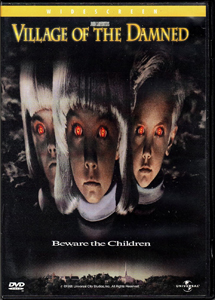
23. “Village of the Damned” (1995)
Written by David Himmelstein
This movie includes Christopher Reeve, Mark Hamill, Kirstie Alley and a young Thomas Dekker, and it’s a remake of a respected horror classic. Yet it’s awful, just awful. It starts off with a decent premise as everyone in a small town faints and the women wake up pregnant. The cinematography is good but the mood is undercut at every turn by (purposeful but ineffective) dead-eyed performances by the alien youths, bizarre disinterest from the investigators and a message of love that comes off as laughable.
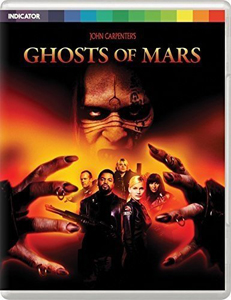
22. “Ghosts of Mars” (2001)
Co-written with Larry Sulkis
In an era of Mars movies, Carpenter’s takes last place after “Red Planet” and “Mission to Mars” partly due to studio interference. The studio wanted Ice Cube as the criminal-turned-hero amid a war against resurrected Martians … but Ice Cube doesn’t seem to want the role. His co-lead is “Species’ ” Natasha Henstridge, her range straining to the breaking point. Good actors like Jason Statham and Clea DuVall are wasted along with decent set and creature designs. The narrative doesn’t even end, leaving the impression that Carpenter gave up.
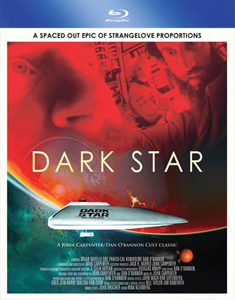
21. “Dark Star” (1974)
Co-written with Dan O’Bannon
This influential Southern Cal student film introduced the lightspeed effect later seen in “Star Wars” and the creature-aboard-a-ship structure later used in by O’Bannon in “Alien.” It’s smart in how it makes fun of the crispness of “2001: A Space Odyssey” by predicting that the future will be just as much of a predictable sh**show as the present. “Dark Star” is low on the list because, frankly, it’s boring.
20. “Pro-Life” (2006, TV episode)
Written by Drew McWeeny and Scott Swan
The second of Carpenter’s two “Masters of Horror” installments marks his deepest dive into Aughts torture porn. It’s also marked by terrifyingly good acting from the always reliable Ron Perlman as a backwoods religious man whose daughter goes in for an abortion, which he does not approve of. The episode is thematically fascinating in that it lands on neither a pro-life nor pro-choice position, showing a healthy disgust for the whole thing. But your final impression will be of watching torture porn more so than art.
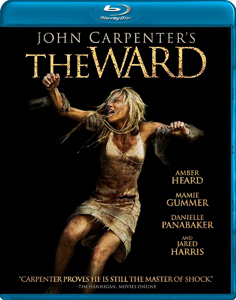
19. “The Ward” (2010)
Written by Michael and Shawn Rasmussen
A skilled cast of young actresses takes us through this exploration of midcentury mistreatment of women’s psychological issues, with electroshock therapy barely holding on as a treatment. Even with Carpenter going back to “Halloween”-style jolts for the first time in ages, it’s rote. A cast including Amber Heard, Danielle Panabaker and Jared Harris keeps the material watchable, but the unwillingness to let Mika Boorem take the final-act baton renders “The Ward” as throwaway mainstream B-horror.
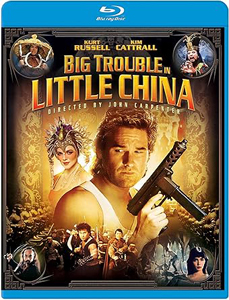
18. “Big Trouble in Little China” (1986)
Written by Gary Goldman and David Z. Weinstein
Again we have a movie that’s more influential than great in and of itself. Kurt Russell plays one of his most iconic roles as tank-top-wearing, not-too-bright trucker Jack Burton, Han Solo taken to the extreme in the trope of the doofus hero. The spirit of his adventure – along with Asian actors who should be the leads except for Hollywood mandates – through (probably un-P.C.) Chinatown mysticism is well-taken, like “Indiana Jones and the Temple of Doom” sans the budget. I don’t begrudge “Big Trouble” for being a massive fan favorite, but I have to be honest and say it never connected with me.
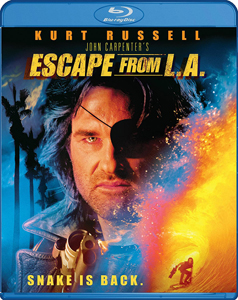
17. “Escape from L.A.” (1996)
Co-written with Debra Hill and Russell
Now we arrive at an even more iconic role for Russell: Snake Plissken. In a fair world, we’d have gotten a half-dozen “Escape” movies, but at least Carpenter graces us with a second one. Though he lazily copies “New York’s” plot, he says he likes this one better, and indeed it has a sense of goofy fun, throwing in Steve Buscemi as Map to the Stars Eddie and (too little of) A.J. Langer as the president’s daughter. I quote the Bangkok Rules scene all the time, and I can’t get too worked up over stupidity like the poorly-CGI’d surfing scene.
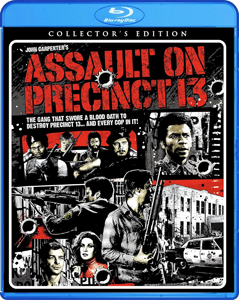
16. “Assault on Precinct 13” (1976)
Carpenter’s mainstream breakthrough is slathered with gritty B-action highlighted by innovative shots like the trio of gangsters staring straight ahead through the windshield as the simple but ominous three-note score (from Carpenter himself) pounds. It truly feels like our heroes can’t escape an urban police precinct as gangsters prowl around it like wraiths, a bunch of proto-Michael Myerses. The alliance between a black cop (Austin Stoker) and white criminal (Darwin Joston) in a survival situation is weighty, but Laurie Zimmer’s non-performance cuts into the quality and the final showdown is predictable.
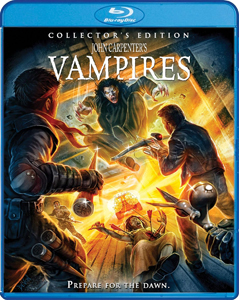
15. “Vampires” (1998)
Written by Don Jakoby
This bizarre blend of fatalism and out-of-place lowbrow comedy (mentions of “wood” are as likely to mean erections as stakes) is not a consistent romp, but it gathers momentum thanks to Katrina actress Sheryl Lee (“Twin Peaks”). The movie initially seems uninterested in character arcs, instead being a showcase for leather-and-sunglasses-clad James Woods to demonstrate action-hero bona fides other directors didn’t see in him. But Katrina emerges as a tragic figure as “Vampires” focuses not on slayers and vampires (although Thomas Ian Griffith is a good villain) but instead on one victim’s slow, terrifying transition from human to bloodsucker.
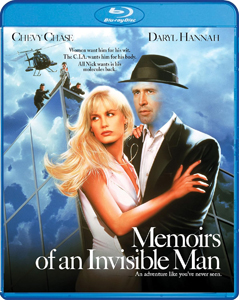
14. “Memoirs of an Invisible Man” (1992)
Written by Robert Collector, Dana Olsen and William Goldman
The making of this movie was a nightmare for Carpenter thanks to the ego of Chevy Chase, and by all accounts the novel is superior, but the end product is not half bad. ILM’s special effects remain impressive, and although it’s not intended as a comedy, it’s naturally amusing to see an invisible man tackle the logistics of moving through the world. Bits of the intended tragedy come through, as Chase and love interest Daryl Hannah are pursued by government agent Sam Neill. Then it’s back to light-heartedness. The tonal see-saw keeps us pleasantly off-balance amid what could’ve been a bland Universal Monsters update.
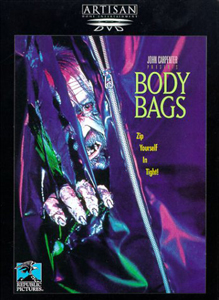
13. “Body Bags” (1993, TV movie)
Co-directed with Tobe Hooper; written by Billy Brown and Dan Angel
This Showtime triptych includes two Carpenter installments and one from “Texas Chain Saw Massacre’s” Hooper, with Carpenter in a rare acting role as the midnight morgue worker who bridges the segments. “Hair” is the funniest thing Carpenter has ever done. Stacy Keach sympathetically plays a man terrified of going bald, but his (zoomed-in CGI) follicles turn on him for reasons explained in a twist ending – another rarity for Carpenter. “The Gas Station” is a fun wink at horror tropes, including a cameo by Wes Craven. Hooper’s “The Eye” – though too thematically similar to “Hair” — serves up a wild Hamill turn.
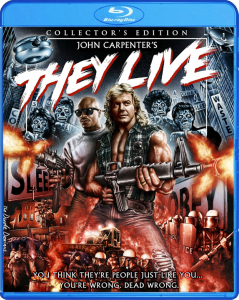
12. “They Live” (1988)
Adapted from a short story by Ray Nelson (also famous in SF geek circles for co-writing PKD’s “The Ganymede Takeover”), this is the most meme-able Carpenter film. Roddy Piper’s special sunglasses translate signs and people into what they truly are. Advertisements say “Obey” and government officials look like skeletons. “They Live” is on-point, but so on-point that there’s no room for interpretation or surprises, and Piper isn’t a particularly good lead. But the wrestler can do his own stunts, and he features with Keith David in the most absurdly overlong street fight in the history of cinema; even “Family Guy’s” parody could merely equal it.
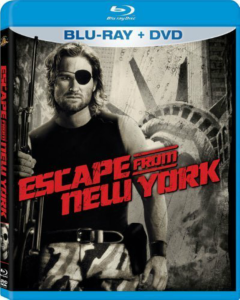
11. “Escape from New York” (1981)
Co-written with Nick Castle
Again we have an iconic and important film that isn’t as much of an entertaining romp as I’d like it to be. Russell ably enters the mix as an A-list action star – Carpenter’s belief in him led to his loyalty – and Plissken gets timeless lines like “President of what?” and “I don’t give a f*** about your war, or your president.” The sci-fi dystopia of Manhattan being a walled-off prison is on point (except that the future of 1997, amusingly, wasn’t distant enough) but the message is so clear from the start that there isn’t much room for discovery. Still, it’s increasingly clear that the world needs more Plisskens and fewer presidents; in that way, this movie will never become dated.
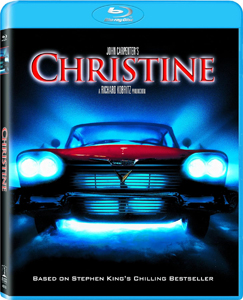
10. “Christine” (1983)
Written by Bill Phillips
In the only collaboration between the literary and cinematic horror masters, Carpenter makes Stephen King’s titular car menacing, and the reversed-footage shot of Christine coming back to life is a classic special-effect workaround. Keith Gordon — always good but he should’ve had a bigger career — satisfyingly (though somewhat abruptly) transitions Arnie Cunningham from geek to vengeance-thirsting hero. It’s a good, albeit dark, message that confidence truly does win the day when navigating bullies and the fairer sex.
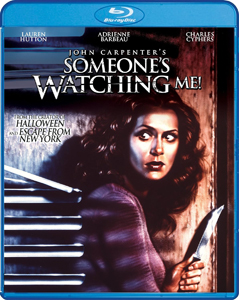
9. “Someone’s Watching Me” (1978, TV movie)
Released almost concurrently with “Halloween,” this TV movie was a boon for NBC, and for decades it was one of the most sought-after “lost” TV movies before getting a proper home-video release. It’s a time capsule of Seventies paranoia – taking the high-tech spy principles of movies like “The Conversation” but aiming them at an innocent young working woman (a plucky Lauren Hutton). It’s of-its-time in a good way, but also an influential entry in the genre of “normal woman fights back against inexplicable harassers.”
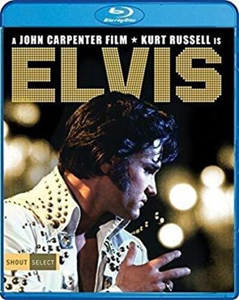
8. “Elvis” (1979, TV movie)
Written by Anthony Lawrence
Carpenter’s greatest career collaboration with an actor starts here as Russell plays the director’s music hero. Being made for TV and with a fan at the helm, this movie does not dig into the darker aspects of Presley’s life, despite an opening segment where he shoots a TV screen in his hotel room. But peppered with a steady supply of hits (the studio recordings, sometimes with embellishments to make them seem more “live”), we enjoy the roller-coaster ride of Elvis’ downs and ups, the latter including one of the most brazen love-at-first-sight moments imaginable, with Priscilla (Season Hubley). While Russell doesn’t resemble the icon, his performance and the makeup team make you believe he’s Elvis.
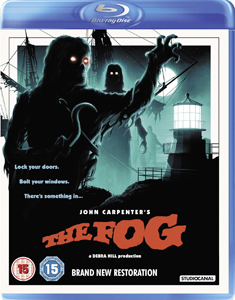
7. “The Fog” (1980)
Co-written with Hill
The most surprisingly good Carpenter film, “The Fog” makes fog – and the ghost-monsters within it – scary. It drips with Eighties slasher cheese as Tom Atkins does his now-much-joked-about thing of effortlessly landing a much younger woman (Jamie Lee Curtis at the height of her Scream Queen powers). But it has a (literally) atmospheric mood as Adrienne Barbeau warns the town about the threat from her lighthouse-cum-radio-tower and everyone pieces together the historical religious mystery. “The Fog” rolls in and out in 90 minutes, an efficient little gem.
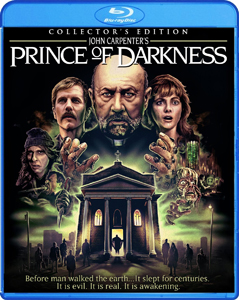
6. “Prince of Darkness” (1987)
Another distinctly Carpenterian way to do B-horror is to have characters immerse themselves in the investigation to an almost parodic degree, as happens in the second of the thematic apocalypse trilogy. Though it doesn’t stick the landing like “The Thing” and “In the Mouth of Madness,” the trio’s second entry was perhaps an influence on “The X-Files.” A team of theologians and scientists study a vat of satanic goo in an abandoned church, and the foreboding score frosts the film front to back. Other than Donald Pleasence, no money is spent on stars, but it doesn’t matter.
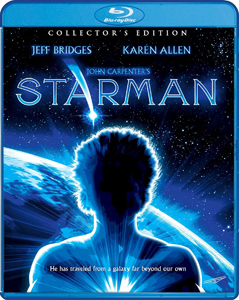
5. “Starman” (1984)
Written by Bruce A. Evans and Raynold Gideon
Aw, it turns out Carpenter is an ole softie at heart. Though he is rightly known as one of the best composers among directors, the score by Jack Nitzsche, particularly the soaring end title, is the best in Carpenter’s catalog (and he plays it at his own concerts). Jeff Bridges and Karen Allen, the very stereotypes of likeable Everypeople actors at the time, have a sweet but melancholic bond, as the title character is a kind and awkward alien who innocently takes the form of her dead husband. “E.T.” with a lower budget and adult themes, “Starman” is goofily funny and melodramatic … but the score strikes right to the heart.
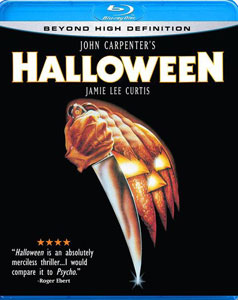
4. “Halloween” (1978)
Co-written with Hill
Discussing the importance of “Halloween” is now as cliched as the tropes that have become cliches in other slashers. Being of the younger portion of Gen-X, I personally got into slashers with “Scream” and later appreciated Carpenter for establishing the formula. (I like “Black Christmas” better but have to admit it doesn’t have enough kills to be a purist slasher.) For a character meant to be nothing more than a “Shape,” the William Shatner-masked Michael Myers has somehow been explored in a dozen sequels/remakes, and Curtis’ Final Girl template has proven equally versatile. Though it’s a relatively cozy – rather than terrifying – viewing experience by today’s standards, “Halloween” is appropriately synonymous with Halloween.
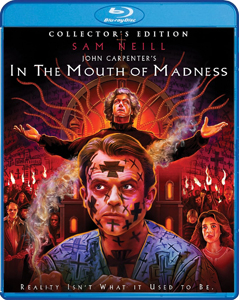
3. “In the Mouth of Madness” (1994)
Written by Michael De Luca
This tastily B-grade “X-Files”-ian, Stephen King-y piece wraps up the apocalypse trilogy. Neill’s insurance adjuster John Trent probes an inexplicable link between the fiction of a King-esque author (the adventure even takes Trent to the New England states) and real events. Several big names pepper the mystery – David Warner, John Glover and for some reason Charlton Heston – while Neill and Julie Carmen carry us along like Mulder and Scully, but if there was a slight unease between them.
2. “Cigarette Burns” (2005, TV episode)
Written by McWeeny and Swan
Like “Pro-Life,” this episode of “Masters of Horror” finds Carpenter tapping into Aughts gore porn – never before seeing this would I have imagined such an interaction between a film projector and intestines — but it also features a helluva creepy and melancholy tale. A pre-“Walking Dead” Norman Reedus plays a depressive art-theater programmer magnetically drawn to tracking down a lost horror classic rumored by some to be a snuff film. Bizarrely, he (and we) sees “cigarette burns” – the indicators of a reel change — in the corner of his mind’s eye (our screen). The episode gets increasingly pitch-dark as it meditates on the thin line between reality and horrific fantasy.
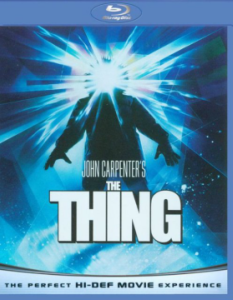
1. “The Thing” (1982)
Written by Bill Lancaster
This is Carpenter’s masterpiece, and let’s be honest, there’s no other contender – even though, bizarrely, it’s merely the second-best film released on June 25, 1982. Both “The Thing” and “Blade Runner” were dismissed at the time; when something breaks new ground, it takes longer for people to notice. Rob Bottin’s ingeniously repulsive practical creature effects will never be matched, as the art form is now dead. Russell, David and Wilford Brimley head up an all-male cast of bedraggled, increasingly humorless Antarctic scientists who find themselves in a paranoia-laden survival situation. It’s a big small movie, with stakes both personal and impacting all mankind. We simmer in the coldness of the temperature and the dread up to the final scene and beyond.