

Hungry for more “Hannibal”? Well, you probably won’t get it, as Thomas Harris wrote four books about Hannibal Lecter, the most famous fictional cannibal, between 1981 and 2006, completing his story as he sees fit. The main course is “Red Dragon,” “The Silence of the Lambs” and “Hannibal,” with a side of one prequel, “Hannibal Rising.”
The film and TV series know how to make use of leftovers, though. There are five films, because “Red Dragon” was adapted twice, and two TV series. Bryan Fuller’s “Hannibal” – which adds meat to the narratives of the “Red Dragon and “Hannibal” novels — in particular plays like the writers had access to Harris’ notebooks about what was going on between the lines.
Whether more is told about this character remains to be seen, but it’s safe to say discussion of his depredations will always make a good topic. Preferably over some fava beans and a nice chianti. Tuck in for my rankings of the 11 installments in the Hannibal Lecter franchise, from appetizer to main course:
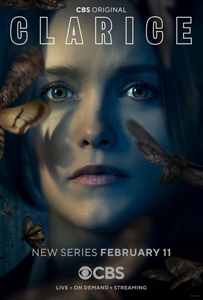
11. “Clarice” (TV show, 2021)
CBS, 13 episodes, created by Jenny Lumet and Alex Kurtzman
Rebecca Breeds, a fine actress who has the important trait of looking like a “Black or White” music video-style morphing of Jodie Foster and Julianne Moore, takes Clarice Starling through the decade between her two film meetings with Hannibal. (Or at least the start of those 10 years, as CBS axed the show after a half-season.) It’s nice to see continuations from “Silence of the Lambs,” such as Starling’s new celebrity status and the (lack of) recovery for Buffalo Bill’s rescued victim Catherine. Though Clarice is worth rooting for as she navigates office politics and climbs the FBI ladder, and she does have allies around her workspace, the show doesn’t develop the warmth of “The X-Files” nor the creepiness of TV’s “Hannibal.” It’s not bad, but it didn’t stand out enough to draw a fanbase.
10. “Hannibal Rising” (novel, 2006)
By Thomas Harris
Harris wrote the first three books how and when he felt like it, but this prequel came about because the movie studio was going to make “Hannibal Rising” regardless; at least this way he could tell the backstory. It’s a good one, although one flaw is that it does not link up with “Red Dragon,” so we never get Hannibal’s transition to “monster” status. As a young man in “Rising,” he kills only bad people, for good reasons – revenge for their killing and eating of his sister in World War II-torn Eastern Europe. Harris convincingly paints a picture of a cycle of depredations spinning out of Naziism and Stalinism, and of Lecter as a person not naturally evil but rather nurtured into that status by the world at large. But a reader can tell the author is not into this material as much as the trilogy.

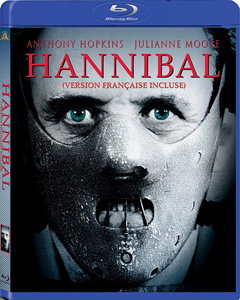
9. “Hannibal” (movie, 2001)
Directed by Ridley Scott, written by Steven Zaillian
Like a fine wine that doesn’t pair well with a choice cut of meat, Moore and Anthony Hopkins lack chemistry as Clarice and Lecter, and I wonder if that’s why Harris’ ending is changed by Zaillian into something confusing. Though it’s hard to accept Clarice as the same character from “Lambs,” it’s a pretty faithful adaptation, with Hans Zimmer’s bass-laden score accompanying Hannibal’s freedom, and the world opening up with an Italian interlude. Gary Oldman, even more unrecognizable than usual as Hannibal-hating villain Mason Verger, adds another stellar turn to his resume. We get to see Lecter be a baller in the kitchen for the first time, culminating in a classic dinner scene with an FBI agent (Ray Liotta) that’s either funny or nauseating, depending on the viewer.
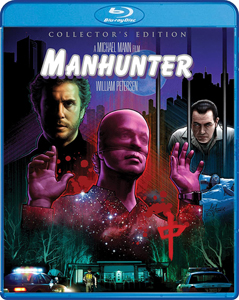
8. “Manhunter” (movie, 1986)
Directed and written by Michael Mann
Hannibal Lecktor and Francis Dollarhyde, each with new spellings for their surnames, quietly make their movie debuts in this adaptation of “Red Dragon.” Brian Cox’s Hannibal is more cultured than menacing, and Tom Noonan’s Dollarhyde lacks both the book’s sympathetic backstory and the violence of his killings, so he comes off flat. William Petersen is the standout as soft-spoken family man Will Graham, who just wants to do his job of putting criminals behind bars; he’s accidentally auditioning for “C.S.I.” Mann’s neon-noir style is another highlight, as the film boasts a synthesizer score, pop love songs and rain – and we can imagine the unshakable smell of cigarettes. Though generally faithful, the film tones down the book’s horror aspects and takes the edge off the ending.
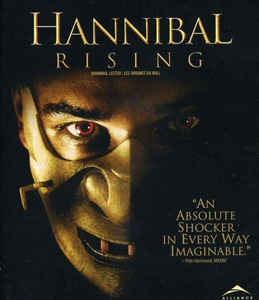
7. “Hannibal Rising” (movie, 2007)
Directed by Peter Webber, written by Harris
This is the only case in the series where the movie is better than the novel, though maybe it shouldn’t be surprising since Harris writes the screenplay; in retrospect, his novel reads like a novelization. The bluntness of the book gains an elegance as we follow the tragic origin story of Hannibal (Aaran Thomas as a kid, Gaspard Ulliel when he hits adulthood). The incredible horrors of World War II for the homeless and countryless shape Lecter into a sociopathic outcast, but the film also chronicles his progression into a doctor, artist and gourmand – albeit one with an unusual palette. We sympathize both with the title character and his victims – equally desperate brigands who ate his sister – in a tasty yet unsettling revenge story.
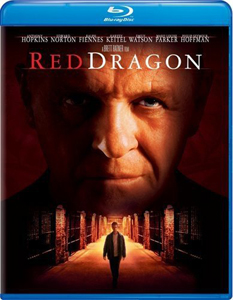
6. “Red Dragon” (movie, 2002)
Directed by Brett Ratner, written by Ted Tally
Part cash-grab, part artistic endeavor, this film “replaces” “Manhunter” by putting Hopkins in the role. Tally nicely beefs up Lecter’s role from the novel, including a delicious opening scene of cannibalism and a deeper relationship with Will (Edward Norton). The writer also keeps the book’s robust backstory for Dolarhyde (Ralph Fiennes), thus allowing us to feel sympathy for the villain, whose chemistry sparks with blind girlfriend Rita (Emily Watson). Unfortunately, though this story takes place in the 1980s, it has a significant 2002 feel (even beyond Lecter looking a tad older than he should). Mann’s film has the style, but Ratner’s has the better narrative and overall cast, giving it a slight edge.
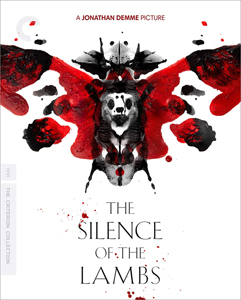
5. “The Silence of the Lambs” (movie, 1991)
Directed by Jonathan Demme, written by Tally
Lecter achieves iconic status as the villain we hate to love thanks to Hopkins. Tally wisely adapts the book faithfully (although toning down the horror for mainstream and Oscar acceptance), giving us character studies of Clarice (Foster), Lecter and Jame “Buffalo Bill” Gumb (Ted Levine). When the meme age arrived, further iconic status was bestowed on the image of Lecter making his “fft-fft-fft” sound after speaking of eating someone’s liver, and Gumb saying “It places the lotion in the basket.” Demme makes the night-vision-goggles scene as suspenseful as Harris does, and the camera angles and cinematography – and of course Clarice — are huge influences on “The X-Files,” which debuted two years later.
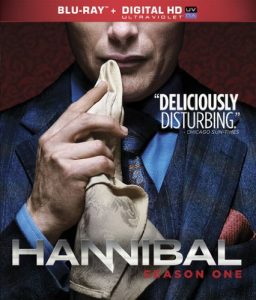
4. “Hannibal” (TV show, 2013-15)
NBC, three seasons, 39 episodes, created by Bryan Fuller
Probably the most gruesome show to ever air on network TV, “Hannibal” had cult status wherein ratings were low yet we knew it would be revered by TV scholars. It emerged when no one was talking about the franchise, yet after three seasons the suave Mads Mikkelsen and the twitchy Hugh Dancy became the actors we think of as Lecter and Graham. The show also boasts Laurence Fishburne and Caroline Dhavernas. I loved Fuller’s work on “Dead Like Me” and “Wonderfalls” and it took me a while, but I eventually understood why he dropped the comedy for 2010s grimdarkness in this deeper exploration of the darkest corners of Harris’ “Hannibal” and “Red Dragon” plots. “Hannibal” is an exercise in envelope-pushing, both in terms of mental-health problems (Lecter is Graham’s psychiatrist!) and kitchen craziness (it gradually becomes more evident that Hannibal prepares human meat).
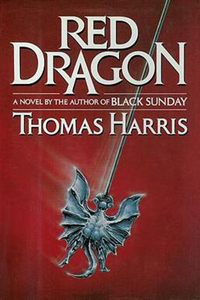
3. “Red Dragon” (novel, 1981)
By Harris
The Lecter legend starts here with … Hannibal barely in the book. Instead our protagonist is FBI profiler Will Graham, who had caught Lecter in an off-page case and visits his cell for advice on other sociopathic subjects. In this case it’s the wonderfully named Francis Dolarhyde, a.k.a. The Tooth Fairy because he bites his victims; he also leaves disturbingly staged photos of corpses. Harris isn’t a prolific writer (this is his second of six total novels), but he’s smooth as silk, ably creating dozens of characters. The book now reads as coming from a simpler time, as Harris shows us the step-by-step procedure of how agents build a case, using technology such as fax machines, not needing nor even dreaming of mass surveillance. They are simply good at their jobs. But Graham is also a family man, something that plays in the background until Harris unleashes it on us in a finale that will shock some readers and thrill all.
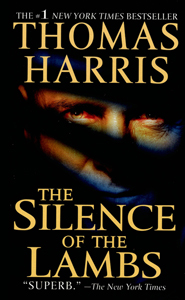
2. “The Silence of the Lambs” (novel, 1988)
By Harris
It’s now old hat to have a crime novel starring a woman investigator dealing with gender-based hurdles, but it was fresh at the time and perfectly done by Harris. Like Will (loosely a Mulder template), Clarice Starling (very much a Scully template) goes to Lecter for advice. FBI boss Crawford returns from “Red Dragon” and believes he can specifically benefit from using Clarice, as she is a young woman like all the victims of Buffalo Bill, who skins them in preparation for a suit that takes “cross-dressing” to a whole ’nother level. Clarice herself is troubled; indeed, the title comes from a childhood trauma. Harris’ skill at writing a grand finale is again on display as he rapidly switches between the points-of-view of villain and heroine, ratcheting tension both in the classic nature of a showdown and also in how we as readers get key information but it’s withheld from Clarice.
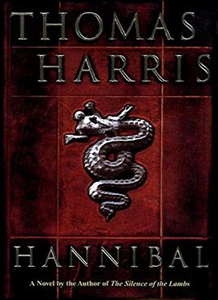
1. “Hannibal” (novel, 1999)
By Harris
The world widens beyond contemporary USA to Italy and glimpses of the past, and from meat-and-potatoes (and hints of unconventional cuisine) FBI procedural to doorstopper epic. Even in the great year of entertainment that was 1999, everyone – even my non-bookish friends – was reading this novel, which Harris writes in a more polished form than the almost hardboiled style of the first two. It’s always risky to tell a fuller story of a mysterious villain, but Harris pulls it off; his careful writing makes us believe Clarice is both repulsed and intrigued by Lecter. Meanwhile, the immediate villain, Verger, is likewise a full-on cannibal and keeps himself alive with high medical technology simply so he can see his rival killed and eaten in torturous fashion. This novel marks the height of Hannibal-ism.