
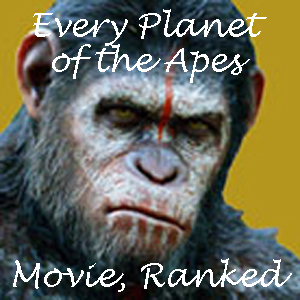
Ironically, the “Planet of the Apes” saga stands out for making us confront our humanity – staggering weaknesses such as a thirst for war (usually on a collective level) but also compassion (usually on an individual level).
Though Charlton Heston, human star of the 1968 original, wasn’t a big fan of endless strings of sequels – he wanted to blow it all to hell in the second film – the franchise (which also includes TV shows, books and comics) keeps going strong.
By flipping perspectives from ape to human, and flipping who is in power, the overriding message shines through, for better or worse: We’re all animals. (But granted, humans are the only species to create such convincing practical and CGI effects.)
Here are my rankings of the 10 “Planet of the Apes” films so far:
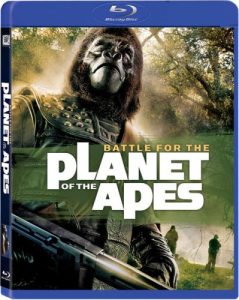
10. “Battle for the Planet of the Apes” (1973)
Directed by J. Lee Thompson; written by John and Joyce Corrington (screenplay) and Paul Dehn (story)
In the bygone age of franchise storytelling, each entry progressively spent less money and made less money; this is the fifth and final film before the “Apes” saga steps further down in price to TV (1974) and cartoons (1975). And it shows. But “The Final Chapter” is nonetheless thematically interesting. A few generations into a post-apocalyptic future, apes and humans live in peace, albeit primitively, but the ape leaders are bored and promote “Riding, not writing” and “Guns! Power!” (sound familiar?). As it’s technically a sequel but thematically a prequel to this time-looping saga, I find the theme of inevitability appropriate yet disappointing; I desired something more hopeful.
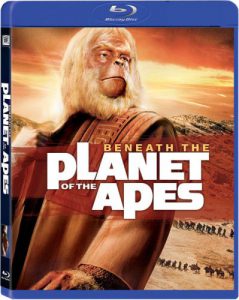
9. “Beneath the Planet of the Apes” (1970)
Directed by Ted Post; written by Dehn (screenplay, story) and Mort Abrahams (story)
You might call this second entry “Lawrence of the Apes,” although it only seems like it’s 2 hours of Brent (James Franciscus) riding across the Forbidden Zone on a horse with loyal Nova (Linda Harrison). I have a soft spot for the exploration of the underground NYC ruins, though, as the story segues into “How Humans Learned to Stop Worrying and Love the Bomb.” A lot of “Apes” films are mainstream explorations of themes from artier sci-fi of the time, but their moral messages resonate – in this case, about the perpetual nature of war and the shaky notion that mutually assured destruction will mitigate matters. Heston, who returns late as Taylor, successfully lobbies for what Harrison Ford couldn’t in “Return of the Jedi.” Killing off a moneymaking franchise, though, is about as easy as ending war.
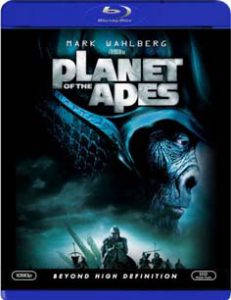
8. “Planet of the Apes” (2001)
Directed by Tim Burton; written by William Broyles Jr., Lawrence Konner and Mark Rosenthal
Burton’s reimagining, which is closer to Pierre Boulle’s 1963 novel in some ways, is notable for showing the apes as holding more power than humans but not acting human. They physically and gutturally behave like apes and live in leafy villages, but they can speak and make tools, and they hold the power for the moment. The actors playing apes – notably Helena Bonham Carter and Paul Giamatti (and also look for a fun cameo) — likewise have the edge. In a lushly forested setting, Burton creates a sense of mystery: We feel like we’ll get a twist like that of the O.G. film. I loathed it in 2001. I admit now that it makes sense, but it’s still lesser: It requires a viewer to accept a complex off-screen narrative, whereas that of the 1968 film is crisp and immediate.
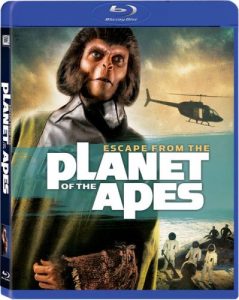
7. “Escape from the Planet of the Apes” (1971)
Directed by Don Taylor, written by Dehn
“Apes” films are famous for endings, but this third entry has the best beginning as we shift from human to ape POV: The mysterious astronauts who land on Earth take off their helmets to reveal apes, who have time-traveled backward from 3955. A long but pleasant stretch follows of Zira (Kim Hunter) and Cornelius (Roddy McDowall) adapting to Seventies L.A. and being embraced by the populace. It’s a landmark achievement in costumed characters as leads. The president takes a politically neutral stance, but the apes are quietly feared by back-hall power-brokers, and fatalism creeps into the chipper mood. This entry is hampered a bit by flat, contemporary cinematography.
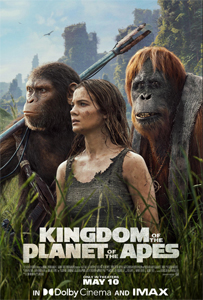
6. “Kingdom of the Planet of the Apes” (2024)
Directed by Wes Ball, written by Josh Friedman
The first post-Caesar film is a thematic reworking of “Battle” if done with all the money you could need instead of on the cheap. Well into the era when viewers accept the apes as real “people,” we’re on a Campbellian hero’s journey with unassuming chimp Noa (Owen Teague) and his friends, including a mute human “echo” (Freya Allan) who is arguably not needed – although it’s fascinating to see how “we” fit into the apes’ distant dystopia. Great ape character creation is done by Peter Macon as the story’s Yoda, the orangutan Raka, and by Kevin Durand as the subtly terrifying Proximus. He bastardizes Caesar’s lesson of “apes together strong” to promote the false paradise of collectivism; I guess some things won’t change even generations down the road.
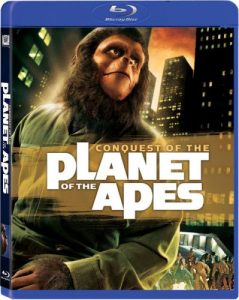
5. “Conquest of the Planet of the Apes” (1972)
Directed by Thompson, written by Dehn
It’s the one with the bright red blood in the Seventies style, but also a legitimate nightmare feel as carnage sweeps through a human city in the future of 1991 in this surprisingly PG-rated fourth entry. If you like your dystopian sci-fi blunter than 1971’s “THX-1138,” “Conquest” fits the bill. As apes – having achieved equal intelligence to humans – are artificially limited by laws, the film boasts sharp parallels to the real world, like how street protests are aggressively limited by an authoritative voice over a loudspeaker. Though effective, the film is cold and dark and a little short on compassionate personal arcs, as Caesar (McDowall, in his second major “Apes” role) is for some reason down to just one human friend, Armando (Ricardo Montalban).
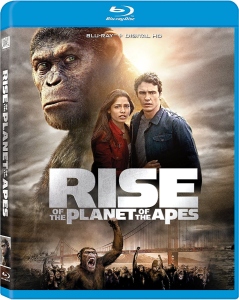
4. “Rise of the Planet of the Apes” (2011)
Directed by Rupert Wyatt, written by Rick Jaffa and Amanda Silver
This remake-done-right starts off the 2010s Caesar trilogy by delving deeper into the question of how the apes rise to match humans in intelligence. It’s not entirely because “It’s not a high bar,” although that theory is represented by particularly slimy cagers played by Brian Cox and Tom Felton. It’s also because of science; in a contrast to the 2020s COVID scandal, here we see that well-meaning science can go awry, too, as James Franco’s Will simply wants to save lab chimp Caesar (Andy Serkis, in what surpasses Gollum as his standout role). The special effects are good enough, but they do sometimes appear 2011-ish whereas the subsequent films hold up.
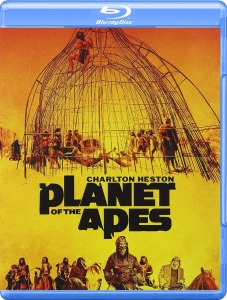
3. “Planet of the Apes” (1968)
Directed by Franklin J. Schaffner; written by Michael Wilson and Rod Serling
It has one of the most famous (and earned) final-moment surprises in film history, and one that still lands, as I’ve observed when gauging reactions of first-time “Planet of the Apes” viewers (yes, there is such a thing). Many “Twilight Zone”-ish scripts feel too small when expanded into big movies, but Serling’s is an exception because it’s such an in-your-face treatise of how those in power treat those not in power, and about how humans treat zoo animals. The reversing of human and ape roles allows it to be mainstream entertainment, as do things like Jerry Goldsmith’s chilling yet rollicking score and the vistas of the desert Southwest. You may not like what you’ll find in the Forbidden Zone, but you’ll like what you find when watching this masterwork.
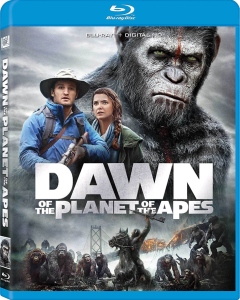
2. “Dawn of the Planet of the Apes” (2014)
Directed by Matt Reeves; written by Mark Bomback, Jaffa and Silver
The second film of the Caesar trilogy expands the world from “Rise” with lushness in the Northern California woods and a layered story. Both the apes (Toby Kebbell along with the returning Serkis) and humans (Gary Oldman, Jason Clarke, Keri Russell) are represented by great actors in an ominous “build-up to war” yarn. The film argues that war is almost inevitable as long as both sides have at least one idiot, and even a small thing – access to water – can trigger bloodshed. In the interspecies friendship stories, we see the best traits of both. Meanwhile, the warmongers strive to emphasize differences, but our takeaway is that humans and apes are both damn dirty animals.
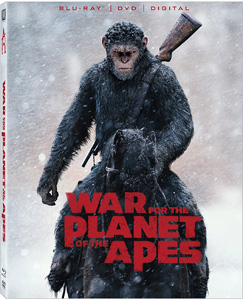
1. “War for the Planet of the Apes” (2017)
Directed by Reeves; written by Bomback and Reeves
I generally don’t enjoy movies about war or imprisonment, so the fact that this capper of the Caesar trilogy tops my “Apes” rankings proves how good it is. As it soberly explores the complex insanity of alliances, enemies, forgiveness, vengeance, murder and survival – but with nuance to even the bad guys such as Woody Harrelson’s Colonel — we don’t for a moment think “This is computer-generated imagery.” Except when I reflect on how it has the most amazing CGI in film history. That it didn’t win the Visual Effects Oscar is one of the all-time snubs, especially after the first two films were robbed. These apes are “people” with arcs, with the scene-stealer being the awkward but big-hearted Bad Ape (Steve Zahn). Research tells me a real chimp was never on screen in the role, but I’m not sure I believe it.