
Douglas Preston and Lincoln Child have been my favorite contemporary authors since I discovered “Relic” in 1995. My friend Josh said “If you like ‘The Lost World,’ check out this one.” Taking that recommendation has paid off many times over, as P&C have released over 50 books either together or individually, growing far beyond their early Michael Crichton riffs.
Their work is comfortingly familiar yet I never know precisely where they’ll go. I don’t just mean on the globe, where they’ve staked claims to New York City, New Mexico, New Orleans, New England, Florida and Italy. Nothing is off-limits, as stories range from small-town murders to monsters in old buildings to interdimensional travel – most with the same cast of characters.
A list of their great characters is pretty long, too, starting with FBI agent Aloysius Pendergast, who doesn’t suffer fools and whose ancestry becomes increasingly bizarre; reliable cop Vincent D’Agosta; museum scientist Margo Green; ambitious journalist Bill Smithback; fiery archaeologist Nora Kelly; Goth-girl-turned-FBI-agent Corrie Swanson; and Constance Greene, who goes from a creepy lurker in Pendergast’s basement to a vengeful action heroine – despite being (though she doesn’t look it) 150 years old.
I suspect Preston and Child’s work will thrill readers for at least that long. As technology makes the world smaller, our boys keep the world big by finding geographic and historical corners of intrigue. Here are my hopefully intriguing rankings of their novels, from worst to first:
53. “Gideon’s Sword” (2011)
Gideon Crew No. 1
As Agatha Christie was more interested in writing espionage novels than her fans were in reading them, the same holds true with P&C and Gideon Crew. Rich and independent Crew – who aims to solve and avenge his father’s murder — comes fully loaded with fighting skills, tech knowledge and an expert contact for his every need. “Sword” becomes more recognizable as a P&C novel when we go to a ghost town on an island in Long Island Sound. Though the New Mexico-based globetrotter lasted five novels before fizzling out, saved by the later books’ plots, his James Bond-ian aspects fizzle quickly.
52. “Blasphemy” (2008)
By Preston; Wyman Ford No. 2
At an atom-collider facility in the Desert Southwest, scientists seem to discover God and converse with Him via a chat program. (Don’t let it be said that Preston shies away from any topic.) The questions and answers are a blast, not making it clear if this is God or a hoax, and the thread’s conclusion is satisfying. The rest of the book is weak, though. The “discovery” of God draws thousands of unhinged Christians behind a rabble-rouser, and it crosses the line from parody of mobs into something distasteful – and more damningly, something I don’t believe while I’m reading it.

51. “The Wheel of Darkness” (2007)
Pendergast No. 8
Despite riffing on the Titanic disaster – extra precautions could spell the doom of the Britainnia, on which Aloysius and Constance probe a theft and murders – this is the weakest of the Pendergast series. It’s the only P&C book with blatant logic holes. For instance, a surefire bail-out method is introduced yet not followed up when the ship is in danger. Usually, when the authors flirt with the supernatural, it leads to a decent pseudo-scientific explanation. Here, they have nothing. “Wheel” has its moments – like posh Constance learning how the other half lives when she goes undercover belowdecks – but this is a rare misfire from our boys.
50. “Gideon’s Corpse” (2012)
Gideon Crew No. 2
Crew is a more colorful character in his sophomore outing due to playing off a close ally and a love interest. This rollicking novel calls to mind “24” in its absurdly fast location-hopping and a terrorist threat to drop a nuke on an American city. P&C tiptoe close to parody with the number of governmental agencies Crew must interact with. The action makes it the reading equivalent of physical exercise, but the adventure doesn’t have much sense of place, hurting its resonance.
49. “Terminal Freeze” (2009)
By Child
Remember the “Scooby Doo” episode where a monster is thawed out of an ice block? Child taps into that creepy-when-a-kid story but with more of an adult chill and grotesque fun. The hungry monster on an Alaskan glacier devours one victim like a cob of corn. I can imagine Child smirking while typing. Though it taps into “Relic’s” Callisto Effect (nature introduces aberrant creatures to maintain population balance), the science is less substantial than in other Child books.
48. “The Ice Limit” (2000)
P&C leave the USA for the first time in a novel so focused on adventure that the scientific mystery might’ve accidentally hooked readers, who pushed for a sequel that finally arrived 16 years later. The plot is a confusing logistical struggle to keep the meteor in its cradle and not sink the ship, but there’s no arguing with the settings. First is a cat-and-mouse game between the asteroid hauler and a rival tanker among the brutal islands off Chile. Then we explore the Screaming Sixties, the only band of ocean that circles the globe without meeting land, and of course the Ice Limit, the point around Antarctica where icebergs appear.
47. “Full Wolf Moon” (2017)
By Child; Jeremy Logan No. 5
Child proves you don’t have to go to the other side of the globe; New York’s Adirondak Mountains are sufficiently dark and scary in this tight, intriguing Logan entry. I love the idea of a backwoods family so isolated and dug in that the Empire State doesn’t try to collect taxes. Logan spends a lot of time in his own head, which makes me like him more. Though the story inevitably goes to the familiar territory of werewolves, Child adds his own scientific spin.
46. “Beyond the Ice Limit” (2016)
Gideon Crew No. 4
This is a good question piece but not a great answer piece. Gideon and science magnate Eli Glinn – in the mold of reckless but well-meaning John Hammond in “The Lost World” – aim to help humanity by learning about the meteorite dropped to the ocean floor in “The Ice Limit.” Wackadoo sci-fi ensues in the margins, but adventure is at the forefront since that’s the style of the Crew novels. Similar stories, like Crichton’s “Sphere,” go deeper into exploring the nature of alien life.
45. “Two Graves” (2012)
Pendergast No. 12, Helen Trilogy No. 3
The Helen Trilogy grows into P&C’s craziest three-book cycle as Pendergast moves across the Western Hemisphere with comical speed searching for his wife’s kidnappers, who seem to be sending him cryptic clues via a string of NYC murders. Side stories for D’Agosta and Corrie – on her first solo case, attempting to clear her dad of a frame job — keep things grounded for a while. The final act is exhaustingly heavy on action. This is a key novel in P&C lore as we find out the secret to why Constance does not appear to age.
44. “Impact” (2010)
By Preston; Wyman Ford No. 3
Inland Maine is the stomping grounds of Stephen King, but Preston lays his claim to the coastal islands, a rare part of the USA that’s under-explored due to the choppy waters. Many islands contain one or zero structures. A pair of young women – one an amateur astronomer – search for a meteor among these islands. Their small story grows ominously big as ex-CIA agent Ford also searches for a meteor and a low-level scientist makes a discovery about Mars.
43. “Bloodless” (2021)
Pendergast No. 20, Leng Trilogy No. 1
P&C have a blast cramming in horror and sci-fi tropes, plus the D.B. Cooper disappearance. A mausoleum scene particularly takes advantage of their Savannah Vampire lore – although the city is not as evocative of some of their other locations. That’s perhaps because they’re distracted by their most wackadoo sci-fi yet: a time machine. This is for the sake of a Constance storyline to come, but for the time being (no pun intended) it’s insane, as we go to a parallel reality. Absurdist fun comes from a clash between a paranormal investigator and a debunker. Though very readable, this is one of P&C’s least grounded novels and I’m glad most are not like this.
42. “Paradox” (2026)
By Preston and Aletheia Preston; Cash & Colcord No. 2
The sequel to “Extinction” sets aside the resurrected species, so father and daughter – in their first team-up – better have a good story. They do. It blends a religious mystery about St. John the Baptist’s skull, UFO sightings in the Colorado mountains, torturous ritual murders and (probably Aletheia’s contribution) legal drama. The serial killings draw tabloid interest, and Colorado Bureau of Investigation Agent Frankie Cash must navigate a smear campaign. She and Sheriff Colcord hew close to Corrie-and-Sheriff-Watts, and they don’t win that comparison, but the book’s finale takes on questions about God as aggressively as “Blasphemy.”
41. “Death Match” (2004)
By Child
Child’s second solo novel stands out from the “scary AI” pack because Liza is a matchmaking computer, having turned romance into a science. The juicy mystery: Why are the Liza-approved super-couples dying? Child raises questions about “perfect” AI and “perfect” couples. The momentum doesn’t carry through to the end, when a “Fugitive” plot takes over and makes several characters behave stupidly. But it’s fascinating how the solution takes us deeper into Liza’s connected hardware that dates to the dawn of computers.
40. “Mount Dragon” (1996)
The authors’ second collaboration riffs on “The Andromeda Strain” and giving us charts to pore over as they explore the internet and GMO fears (both now dated) and the threat of a pandemic springing from experiments (decidedly not dated). As they might not have realized how many novels they’d get to write, they also cram in some desert adventure (something to be done better in “Thunderhead” and elsewhere). Everyone is a one-off except Mime, a hacker who will later help Pendergast.
39. “The Forgotten Room” (2015)
By Child; Jeremy Logan No. 4
In a rare mostly single-setting story, enigmalogist Logan investigates a weird-science think tank in Rhode Island where a non-suicidal man seemingly killed himself. The functional wing of the old building is modernized, but the other wing is closed off and architecturally bizarre – every room is accessible only by progressing through another room. As he peppers in musings on weirdness like synesthesia (the ability to taste colors, etc.) and writes about creepy music (something that would play better in an aural medium), Child makes us wonder what’s in the titular room.
38. “The Obsidian Chamber” (2016)
Pendergast No. 16
This novel is memorable (for better or worse) for its first 100 pages of insane action as Pendergast’s butler Proctor chases Constance and her kidnapper across Africa, fighting off lions at one point, and later for the raciest sex scene in the P&C catalog. It’s a key Constance novel even though the POV is that of Diogenes. Tapping directly into his brain is the only way we’d know this manipulative brother of Aloysius – who used Constance as a pawn in previous novels – truly does love her. Flavia, Diogenes’ soulmate in sociopathy, is an intriguing supporting player.
37. “The Codex” (2003)
By Preston
Fourteen years before he literally visits Honduras’ fabled White City in the nonfiction book “Lost City of the Monkey God,” Preston imagines it. Perhaps due to his respect for the real place, which is so overgrown it can only be pinpointed by lidar, the White City isn’t much of a player in the novel. But the hot jungle is, serving up “Indiana Jones”-style set pieces like a rickety bridge over a chasm so deep that supposedly people turn to dust before hitting the bottom. The codex lists amazing medicinal possibilities, and – back in American boardrooms – Preston paints the pharmaceutical world well.
36. “Utopia” (2002)
By Child; also titled “Lethal Velocity”
Child’s first solo novel shows his strengths and weaknesses. He’s a marvelous single-novel world-builder. He invents four amusement parks in one under a large dome in the desert outside Las Vegas, such a huge operation that a town has sprung up to support the workers. It’s like Knott’s Camp Snoopy on steroids, fun to simply wander around in. The sabotage-of-the-AI plot is intense and the characters are fine, including a widower hitting it off with a colleague while his young daughter objects. Child can’t sustain the intrigue till the end, when it becomes simply an action novel.
35. “Dead Mountain” (2023)
Nora Kelly No. 4
Nora and Corrie examine a cold case from 15 Halloweens ago: A group of hikers had seemingly run out of their tents in a New Mexico snowstorm without their cold-weather gear, thus freezing to death. What prompted them? “Dead Mountain” loses cachet in comparison to the real-life Russian event chronicled in Preston’s collection “The Lost Tomb,” also from 2023. The scientific explanation for the true story is more fascinating than what P&C devise (but admittedly harder to dramatize). I’m not big on frame-job stories, but Skip’s B-plot does build to satisfying comeuppance for the power-abusers.
34. “Chrysalis” (2022)
By Child; Jeremy Logan No. 4
“Ghost in the machine” stories have been done (including by Child himself), and he’s in a more positive mood here in inventing Omega. It’s like the iteration after Google Glass; maybe something like Google Brain. Audience surrogate Logan enters a “Ready Player One” type of virtual reality to buy shoes at the titular city-sized facility in a Connecticut crater. Chrysalis is like all the big corporations combined (including Eden, from “Death Match”), and as with the tech, Child isn’t a fearmonger. The author’s excitement about tech’s potential for good sticks with a reader more than the espionage plot.
33. “The Third Gate” (2012)
By Child; Jeremy Logan No. 3
One of this book’s settings sticks with me: The Suud is a mud-choked patch of the Nile River in Sudan where Logan and his team dig (and dive) for valuable Egyptian artifacts. Along with its primitive setting – which the team attempts to conquer with tech – “Gate” is notable for explorations of back corners of the mind, as we probe near-death experiences. By the closing chapters, Child has bitten off more than he can chew, but it’s a tasty meal till then.
32. “Pendergast: The Beginning” (2026)
Pendergast prequel
This plot about a serial killer who seems to be collecting human arms (making this a grisly companion piece to “Crooked River’s” feet) could take place at any time. But since it’s set in 1994, months before “Relic,” it’s fun to see the meticulous nature of early database searches. They’re performed, to the annoyance of Pendergast’s senior FBI partner, within the agent’s sweltering Louisiana house. Among the evocative locations are rundown mansions in the swamplands that had to be abandoned when water levels rose.
31. “The Pharaoh Key” (2018)
Gideon Crew No. 5
The Hala’ib Triangle is creepy enough in the real world – an area claimed (and sometimes fought over) by Egypt and Sudan, though neither really wants it because it’s just forbidding desert. In the book, it also has a Bermuda Triangle-esque mythology: People don’t return from there. But there’s treasure to be found, so Gideon, colleague Garza and intriguing interloper Imogen team up. Perhaps they’ll find not merely monetary treasures but – more interesting to readers – secrets about the earliest days of monotheistic worship.
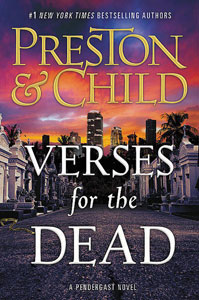
30. “Verses for the Dead” (2018)
Pendergast No. 18
This venture into the Florida swamps might appeal to John D. MacDonald fans, and it’s also a pure puzzle mystery in that we can mull clues and make connections. We’re sort of re-introduced to our favorite FBI agent because so many new characters are meeting him – and are taken aback by his quirks — for the first time. Among them are Agent Coldmoon, who will partner with Pendergast in multiple cases, and a Miami Herald reporter who is such a brazen copy of a bygone character that I can’t help but chuckle and allow it. Also a throwback is the way the reporter receives written letters supposedly from the Brokenhearts serial killer who removes his victims’ hearts. C’mon, guys, even psychopaths use email now.
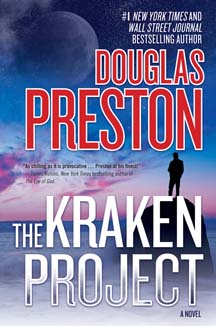
29. “The Kraken Project” (2014)
By Preston; Wyman Ford No. 4
Preston flips the “fear of artificial intelligence” cliché on its head by imagining that Dorothy – created to control a submarine on Saturn’s moon of Titan by using “scruffy logic” (the ability to learn from experience) – is good, not evil. This would seem to be boring, but it’s not. The high-tech space mission blends with a boy-and-his-robot story that feels cinematic. Within a thriller plot, the author is actually interested in exploring the meaning of life, like in “Blasphemy” but better. The Pollyanna ending isn’t profound, but it’s smile-worthy.
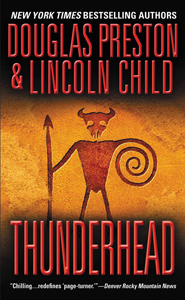
28. “Thunderhead” (1999)
Nora Kelly No. 0
The duo’s first elite Southwest adventure introduces Nora two decades before she’d get her own series, and they write a cute romance between the archaeologist and journalist Smithback. “X-Files” fans of the time might’ve enjoyed getting another take on the mystery of the Anasazi, the once-thriving tribe that mysteriously disappeared. Man-made Lake Powell also holds secrets underneath its surface. I didn’t grasp all the terminology about the terrain and ancient stone structures, but a flash-flood description is wonderful as the titular storm delivers the (grave) goods.
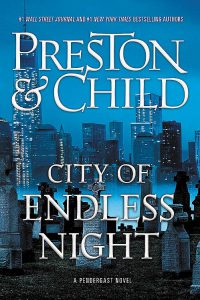
27. “City of Endless Night” (2018)
Pendergast No. 17
P&C tap into a timely theme with a mystery about a string of decapitation murders centered on New Yorkers’ fear of the 1 percent. They’re also interested in how topics become hot. While Bryce Harriman’s work for the tabloid New York Post seems old-fashioned, with an emphasis on rack sales, the authors also show interest in the impact of an independent activist’s blog. For settings, you can’t go wrong with an abandoned mental hospital on Long Island that still contains all its paper records because it’s too much work to transport them.
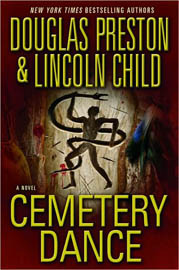
26. “Cemetery Dance” (2009)
Pendergast No. 9
Not usually ones to follow trends, P&C do tap into the zombie (or zombii) craze while the “Walking Dead” comics are hot. But it’s a good novel for clue-digging and atmosphere more so than violent attacks – although, infamously among fans, a favorite character meets an end. In a cheeky way, “Dance” explores both urban sprawl (Pendergast buys neighboring property to expand his basements) and the oddity of undeveloped lands within a big city – in this case, a patch of woods within Manhattan.
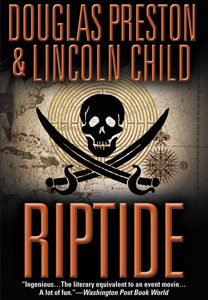
25. “Riptide” (1998)
It’s kind of a shame P&C got away from writing novels about one-off characters, wherein they can build arcs, personalities and emotions from scratch. The wistfulness of Malin, who can’t bring himself to sell his memory-filled home on the Maine coast, draws us in. The treasure hunt on the nearby island – based on a true story — keeps us there. We feel the thrills and frustrations of a mid-island shaft that a long-dead booby-trapper designed to constantly flood; it’s a fascinating battle of wits between the living and dead. The final chapters feature big action, but it’s the earlier smallness that makes “Riptide” a treasure.
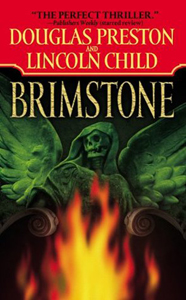
24. “Brimstone” (2004)
Pendergast No. 5, Diogenes Trilogy No. 1
This slow-burn trilogy-starter widens Pendergast’s world to include his crazy brother (an intriguing shadowy figure here). I’m guessing it’s Preston in particular who takes us to Italy, where he lived for a time and got an up-close look at its corrupt justice system (check out his elite nonfiction work, 2008’s “The Monster of Florence,” written with Mario Spezi). P&C do a neat callback to Wilkie Collins’ “The Woman in White” (1859) — the first modern mystery novel – via the villain. Their knack for making any topic interesting via their passionate prose is on display when they write about the process of constructing Stradivarius violins.
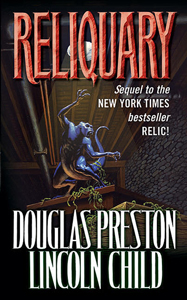
23. “Reliquary” (1997)
Pendergast No. 2, Relic Duology No. 2
City undergrounds are among my favorite locales to read about, and “Reliquary’s” is made more fascinating because it’s real. The authors note that an estimated 5,000 people live beneath the streets of NYC. Among the abandoned places are the Astor Tunnels, located the equivalent of 30 stories below ground and featuring opulent subway lounges. No wonder the Ninja Turtles feel at home. While the finale is overblown, this is overall a thrilling expansion of the Mbwun mythology that goes to the heart of the creature’s creation, with budding teamwork between Pendergast, D’Agosta and Margo.
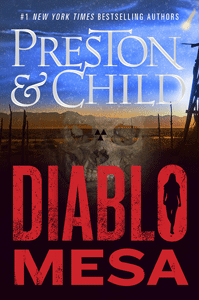
22. “Diablo Mesa” (2022)
Nora Kelly No. 3
It had to happen eventually, with Nora and Corrie both stationed in Preston’s stomping grounds of New Mexico: a story about the 1947 Roswell incident. Both women are in fine form, especially Nora. She tells off her boss at the Santa Fe institute and is then hired in the parking lot by an Elon Musk type who fully funds a dig that was impossible prior to lidar mapping. Nora’s brother Skip enters the mix as a screwup we root for. The final act goes wild with its action but not necessarily its plausibility; modern readers will likely expect such a literal deep state.
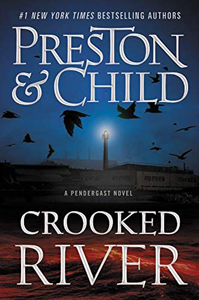
21. “Crooked River” (2020)
Pendergast No. 19
The second book set in Florida (where Child lives) is fun for me because I have vacationed at the Gulf Coast sites, but I’d like it regardless because it’s a bizarre mystery about 100 or so dismembered feet washed ashore. Pendergast, Coldmoon and Constance make an unorthodox trio, with the latter probing a haunted house on Sanibel Island to pass the time. P&C have fun writing the Miami Herald’s Roger Smithback as he gets in over his head in a gang investigation. After a thrilling standoff in Cuban waters, the energy stays high when the action moves to inland areas even Google Maps knows little about.
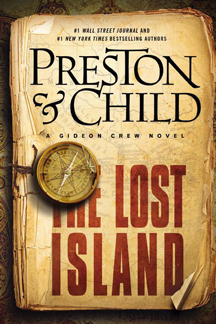
20. “The Lost Island” (2014)
Gideon Crew No. 3
P&C salvage the Crew series in a major way by sending him on a Caribbean adventure with great new ally Amy, as they explore obscure islands and dodge drug runners. It’s paired with science-minded magnate Glinn and his team working to solve a riddle that draws on real history and goes back further than the Holmesian mystery in “White Fire.” Columbus and his contemporaries might not have been the first Europeans to “discover” the New World. Instead, what if Homer’s “Odyssey” was based on it? Plus, to get Crew involved: There’s buried treasure.
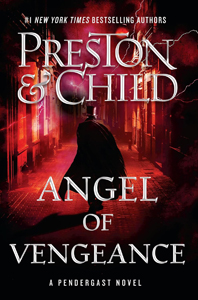
19. “Angel of Vengeance” (2024)
Pendergast No. 22, Leng Trilogy No. 3
Wackadoo sci-fi was necessary to set it up, but now P&C are settled into the sights, sounds and not-so-pleasant smells of 1881 New York City. A multi-pronged cat-and-mouse game ensues between three dark characters – Constance, Leng and Diogenes – along with our heroes. It’s amusing how Pendergast, just as he adjusts to other cultures, adjusts to this other time, manipulating local officials. A side plot takes D’Agosta to Mount Desert Island off the coast of Maine, a fascinatingly remote place in a remote time. Having fun with historical figures without going overboard, this is a satisfying trilogy capper.
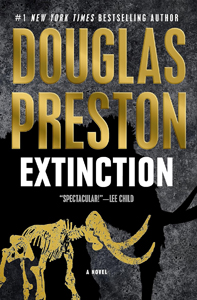
18. “Extinction” (2024)
By Preston; Cash & Colcord No. 1
We see from page one that it could be called “De-Extinction”: Woolly mammoths have been brought back! This is more grounded than “Jurassic Park,” because this animal’s DNA has been decoded IRL. A missing-campers mystery kicks off a yarn that gets much darker and takes us through the tunnels of time, and the bowels of a complex that has built its underground hallways out of the existing mines. Suffice it to say the opening-page surprise gets surpassed in the final act.
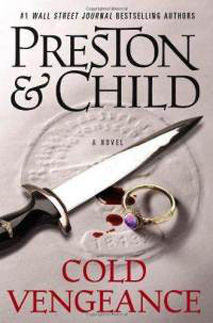
17. “Cold Vengeance” (2011)
Pendergast No. 11, Helen Trilogy No. 2
This is the trilogy’s dark middle chapter as Pendergast investigates leads that his wife might still be alive; an early opponent who thinks he has the FBI agent dead to rights tells him as much. Though the mystery progresses like trudging through a swamp (actually multiple swamps, in Scotland and Louisiana), the investigation is a heady mix of new- and old-school – the latter represented by Wren guiding the way through musty basement archives in an NYC library. A maturing Corrie returns as Pendergast’s loyal helper and Constance gets her most robust characterization up to now.
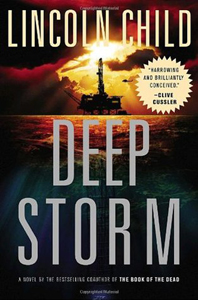
16. “Deep Storm” (2007)
By Child; Jeremy Logan No. 1
Child’s best solo effort expertly places mysteries atop mysteries, starting with an oil rig in the North Atlantic that might have stumbled upon Atlantis. As is often the case with Child, the setting is spectacular, in this case the titular ocean-floor structure that functions as a city, complete with a movie theater. Its walls can’t keep the cold ocean at bay, but a dome around it — with a system of pipes to distribute and relieve water pressure — does. This is sci-fi stuff, but intriguingly plausible for some point in the future. At the other end of the spectrum of locales, minor character (for now) Logan researches Atlantis in dank, candlelit libraries.
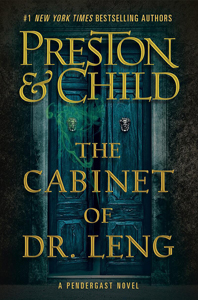
15. “The Cabinet of Dr. Leng” (2023)
Pendergast No. 21, Leng Trilogy No. 2
This novel is down-to-Earth. Just not this Earth. Taking advantage of the time machine (actually an alternate-timeline-hopping machine, an important distinction) from “Bloodless,” Constance travels to the age of Jack the Ripper – but in NYC – to get revenge on the title character. Pendergast, familiar with all-consuming rage from “Cold Vengeance,” aims to save her from herself, while also avoiding running into her (not because it will trigger a time paradox, but because it will tick her off). It’s hilarious to see Coldmoon and D’Agosta compare notes about Pendergast over beers.
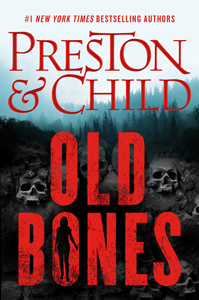
14. “Old Bones” (2019)
Nora Kelly No. 1
Although we had known both, separately, from the Pendergast novels, this marks the first Nora-and-Corrie team-up. The archaeologist is starting a new phase of her career at a Santa Fe institute and the younger woman is starting her FBI path at the Mountain states’ bureau. Their first case takes them to a spot only 12 miles from a California interstate yet deep into the chilling mysteries of the Donner Party. P&C’s details about cannibalism would make Thomas Harris and Dan Simmons shiver, but thanks to two vibrant leads who love their jobs, you’ll probably stave off nightmares.
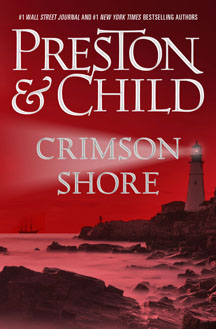
13. “Crimson Shore” (2015)
Pendergast No. 15
P&C briefly intersect with “Sideways,” having fun with Pendergast’s wine knowledge. But ultimately the setting on the marshy coast of Preston’s home state of Massachusetts – wadable at low tide, deadly at high tide – is most evocative. Lighthouse enthusiasts will find something to enjoy as well, before lore about a shipwreck, Salem witches and demons coalesce into an ending with appreciable shades of “Relic” and “Still Life with Crows.” This is a controversial novel among fans as Constance – learning how to move through modern society (saying she’s Amish is the easiest explanation) – and Pendergast might be romantically attracted. But at least that scene is loaded with enough awkwardness to make it real.
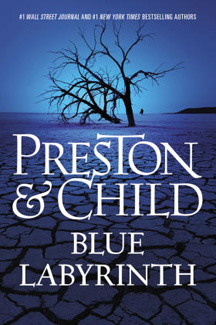
12. “Blue Labyrinth” (2014)
Pendergast No. 14
Sometimes a setting sticks with me so much that I research it further. Such is the case with the abandoned luxury resort on the shores of the Salton Sea. The Southern California lake was accidentally created by a burst dam in the 20th century, became a vacation hotbed, then turned into a ghost town due to rising salt levels and dead fish. It’s a great setting, and “Labyrinth” doesn’t stop there, as we also get a dangerous city-within-a-city in Rio de Janeiro and a classic museum chase in NYC. The villain’s complex scheme flirts with silliness, but ends up shockingly personal. Both old fave Margo Green and never-old Constance Greene (no relation) star, with the latter unleashing action-heroine chops.
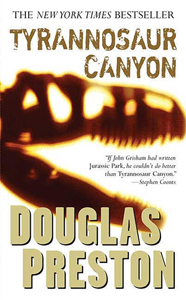
11. “Tyrannosaur Canyon” (2005)
By Preston; Wyman Ford No. 1
Though it’s not about resurrected dinosaurs, “Canyon” evokes the T-rex via italicized flashback segments and combines it with the thrill of a discovery in fossil bones via spunky lab worker Melodie at the American Museum of Natural History. (It’s not technically the one from the P&C books.) Sometimes pushing the line of silliness with a villain who flexes to make his T-rex tattoo look like it’s roaring, this is a great novel about New Mexico archaeology that becomes dangerous due to the money involved, along with that hint of wider stakes. It’s like a rollicking, modern version of Crichton’s later-published “Dragon Teeth.”
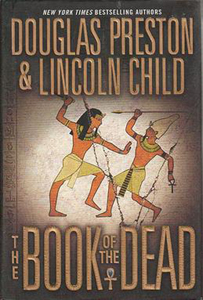
10. “The Book of the Dead” (2006)
Pendergast No. 7, Diogenes Trilogy No. 3
The epic trilogy capper makes good use of villains Diogenes (we know his second, secret identity whereas our heroes don’t) and the museum – this time exploring the attics (plural, because several buildings are connected). Even without monsters, it’s a creepy place. Nora’s rushed mummy-exhibit opening gala, with all its attendant problems, is thrilling. The story is more wild than unwieldy as it leaves NYC for a remote Mediterranean island. Diogenes’ paramour Constance comes into her own as a primary player, but with plenty of mysteriousness left to mine as she’s in the broad “woman scorned” role here.
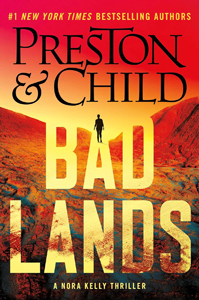
9. “Badlands” (2025)
Nora Kelly No. 5
P&C smoothly blend old and new bizarreness — a modern suicide of a mentally healthy woman in the desert and the inexplicable disappearance of the Gallina Indians. They engagingly bring us up to date on various issues since the time of their early Southwest novel “Thunderhead,” Nora’s first appearance. She and Corrie – proving herself as the lead FBI agent — delve into an ancient curse set against the equally strange modern issues of fracking, mineral rights and the government’s parceling of Indian lands in a checkerboard pattern that makes it impossible not to trespass. The classic debate over whether artifacts belong on the collectibles market, in a museum or totally untouched hasn’t been this intense since Indiana Jones’ heyday.
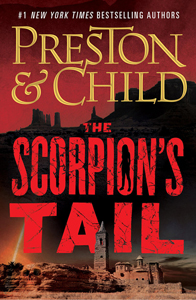
8. “The Scorpion’s Tail” (2021)
Nora Kelly No. 2
It’s amusing to see the antagonism between Nora and Corrie – who have emerged as P&C’s two best female characters (apologies to Constance) – gradually turn into a friendship, as neither can resist seeing a job done properly. In this case it’s the unearthing of an ancient skeleton – indicating a peculiarly awful death — in a New Mexico ghost town that could have value both as evidence and as archaeology. The mystery deliciously builds, leading to a wild but earned conclusion. Slower-burn developments are Corrie’s career (she’s in her rookie year, and makes mistakes) and her possible romance with rural sheriff Homer Watts.
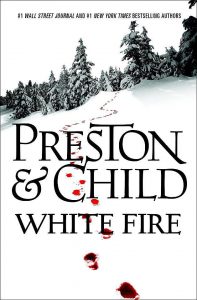
7. “White Fire” (2013)
Pendergast No. 13
Like many mystery writers, P&C revere Arthur Conan Doyle, and here they make him a key figure in a modern mystery set in the Rockies at Christmastime. They imagine Doyle wrote a Sherlock Holmes story, “The Adventure of Aspern Hall,” but it was too grisly to be published – and Doyle himself was fine with that; he just needed to get the horrific (and possibly true) tale out of his system. (He published the tamer “Hound of the Baskervilles” instead.) The whole clue-containing short story is included, and P&C mimic Doyle well. Corrie helps Pendergast with forensics while she works on the paper that will launch her FBI career. I appreciate the young woman’s real-world financial concerns and how she is thankful for Pendergast’s monetary help but desires to make it on her own.
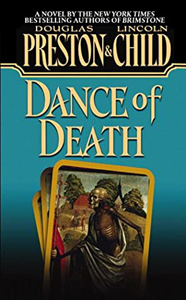
6. “Dance of Death” (2005)
Pendergast No. 6, Diogenes Trilogy No. 2
The gang’s all here, allowing for entertaining rivalries such as Nora-vs.-Margo among museum politics and Smithback-vs.-Harriman among journalists. Most importantly, Diogenes emerges as an ingenious villain; his rivalry with brother Aloysius is what we assume Moriarty-vs.-Holmes is like till we read Doyle’s canon and see it’s not really on the page. New York City is Diogenes’ chessboard for crimes that mess with Aloysius’ mind and keep him a step behind. P&C know how to balance a given story’s needs to present the right tone; here, the police are competent rather than absurd, thus making Diogenes’ successes more impressive.
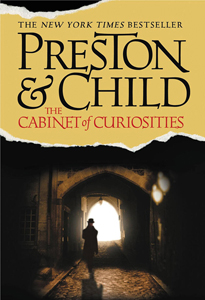
5. “The Cabinet of Curiosities” (2002)
Pendergast No. 3
This is where P&C realize they love writing about Pendergast (who has New Orleans roots), and they also love writing about NYC, so they have to link the two. We’re introduced to Pendergast’s artifact-filled mansion at 891 Riverside Drive, the series’ best setting other than the museum (which also returns). Rather than merely an agent on a case, Pendergast’s own mysterious family background factors in: A serial killer called The Surgeon is mimicking life-extending experiments of Aloysius’ ancestor Dr. Enoch Leng. P&C go all-in with humor, as the portrayal of bumbling police detective Custer – jumping to the most convenient conclusions – is their finest farce.
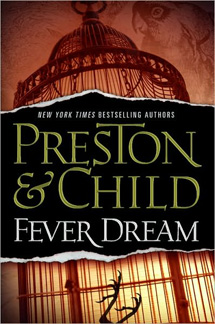
4. “Fever Dream” (2010)
Pendergast No. 10, Helen Trilogy No. 1
The first of the Helen Trilogy marks a turning point because the case is intensely personal for Pendergast; his wife is killed in a seemingly accidental tragedy on an Africa safari, but he knows there’s more to it. Yet evidence suggests he might not know his wife as well as he thought. This book goes all over the place geographically – I can smell each of the Southern towns Pendergast and D’Agosta visit — yet avoids being overstuffed. Rather than a trusted authority figure with a unique personality, here we begin to be wary of Pendergast – like when he assures police detective Heyward he won’t kill his wife’s killer – and that enriches his characterization.
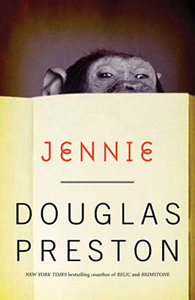
3. “Jennie” (1994)
By Preston
Preston’s first work of fiction is unlike anything else in his catalog, a heart-wrenching chronicle of the titular chimpanzee raised in a human family, based on real accounts. He takes us from the happy moments of Jennie playing tickle-chase with her human siblings to the tragedy that emerges when evidence rises that a strong adult chimp can be dangerous. Fascinatingly, “Jennie” delves into humans’ and chimps’ differences in how much they will allow their freedom to be quashed by outside forces, suggesting that while humans may be “smarter” than our closest relative in the animal kingdom, it’s only by one definition of the word.
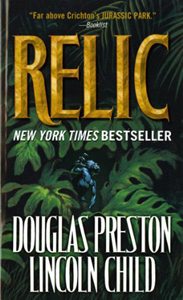
2. “Relic” (1995)
Pendergast No. 1, Relic Duology No. 1
In their breakthrough collaboration, our favorite characters are in place – Pendergast, D’Agosta, Margo, Smithback … and my favorite character: the New York Museum of Natural History. It covers six blocks, has a flood-prone basement without accurate blueprints, and offers cozy library cubbies for research. Plus a monster is lurking about, a “strange, goatish odor” being your only warning. P&C owe something to Crichton as they explore the idea of a prehistoric creature surviving to present day, but “Relic” bests the same year’s “The Lost World.” In un-Crichtonian fashion, they add cheeky dark humor like the stampede to escape a gala-turned-massacre and the predictable incompetence of local FBI man Coffey.
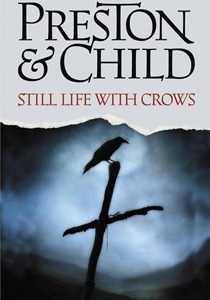
1. “Still Life with Crows” (2003)
Pendergast No. 4
This novel is perfection, a ready-made horror movie masterpiece of it ever gets adapted. Pendergast and newcomer Corrie, a rebellious trailer-park teen, help each other grow while probing a grisly string of killings. She distrusts all adults, so when he wins her over – and does seemingly supernatural things (flow-walking is introduced here) – it’s convincing to us, too. Meanwhile, she just needs an adult to believe in her. The case amid the oppressively hot cornfields and turkey-slaughtering plants of western Kansas is like the greatest nursery-rhyme mystery Christie never wrote (drawing upon “What are Little Boys Made Of?”). It leads to a shocking reveal (in caves, not common in Kansas, but I’ll allow it) and a chillingly plausible explanation for how the killer came to be.
Click here to visit our Preston & Child Zone.
Books image by svecaleksandr249 from Pixabay.